We Used to Get Lost on Purpose: The Road Trip Before the Algorithm Took the Wheel
Somewhere in a box in a garage or a closet or the back of a hall drawer, there's probably an old road atlas. Maybe a Rand McNally from the late 1990s, spine cracked from being folded wrong, certain pages soft with use. If you grew up road-tripping before smartphones, that atlas wasn't just a reference tool. It was part of the experience — something you argued over, traced your finger across, held up to the window trying to read county road numbers in the fading afternoon light.
That version of travel is gone. Not mostly gone — actually, functionally gone. And the loss is stranger and more significant than it might first appear.
The Work That Came Before You Left
Planning a road trip in 1988 or 1995 or even 2002 was a project. It started days before departure. You pulled out the atlas and figured out a rough route, then cross-referenced it with a AAA TripTik if you were thorough — those spiral-bound custom strip maps that AAA offices would prepare for members, showing your exact route in narrow vertical slices with handwritten notes about construction and seasonal closures.
You called ahead to motels, because you couldn't book them online. You asked locals at the gas station in Amarillo whether you should take the highway or the state route, and they'd give you an opinion with actual conviction behind it. You wrote down directions on a notepad. You estimated arrival times based on mileage and your own sense of how fast you drove.
All of that preparation created something GPS cannot replicate: investment. You knew the route because you'd studied it. You had a mental picture of the landscape before you arrived. And when something went wrong — when you missed a turn, when the road was closed, when you ended up somewhere unplanned — you were equipped to improvise rather than just recalculate.
The Geography of Getting Lost
Here's what the navigation apps have genuinely eliminated, and it's worth naming directly: the productive detour.
Every serious road tripper from the pre-GPS era has a version of this story. You took a wrong turn outside of Flagstaff and stumbled onto a two-lane road that wound through red rock country you'd never have found otherwise. You missed the interstate entrance in rural Mississippi and ended up at a barbecue place that had no sign and no Yelp page and made the best ribs you've ever eaten. You got turned around in the Texas Hill Country and found a swimming hole that wasn't in any guidebook.
These weren't accidents in the negative sense. They were the natural consequence of moving through unfamiliar territory with imperfect information — which is, if you think about it, the actual definition of exploration. The inefficiency was the point. The friction generated discovery.
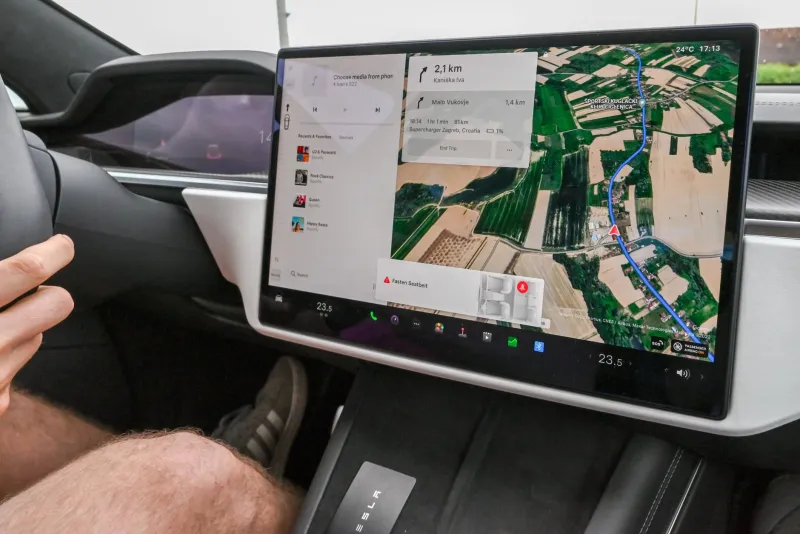
GPS doesn't just remove wrong turns. It removes the entire category of unexpected right turns. The algorithm finds the fastest route between two points and holds you to it. Every deviation is immediately corrected. The road trip becomes a logistics operation rather than an adventure.
What We Traded and What We Got
This isn't a straightforward argument against navigation technology. GPS has real and significant value. It's reduced accidents caused by drivers looking at maps instead of roads. It's made travel accessible to people who struggle with spatial reasoning. It's saved genuine time on trips where time actually matters. For a delivery driver in an unfamiliar city, turn-by-turn directions aren't a convenience — they're the job.
But there's a difference between using navigation as a tool and surrendering to it entirely. The way most Americans use GPS today is closer to the latter. We don't study routes anymore. We don't develop a mental model of the geography we're passing through. We follow the voice, and when we arrive, we often couldn't describe the path we took with any confidence.
Research in cognitive science has started to confirm what road-trippers have felt intuitively: heavy reliance on GPS navigation appears to reduce the development and exercise of spatial memory. The hippocampus, which handles spatial reasoning, gets less of a workout when you outsource navigation entirely. You don't just fail to learn the route — you may be gradually diminishing the capacity to learn routes at all.
The Blue Dot and the Horizon
There's a particular quality to the American road trip that made it culturally distinct — not just transportation between points, but a relationship with the landscape, an engagement with scale, a confrontation with the size of the country. You couldn't drive Route 66 or the Blue Ridge Parkway or Highway 1 along the California coast and remain passive. The road demanded something from you.
The blue dot on the screen has changed that relationship in a subtle but fundamental way. The landscape is still there. The roads are still spectacular. But the experience has been mediated, buffered, optimized. You're consuming the road trip rather than having one.
None of this means you should throw your phone out the window on your next drive to Denver. But it might mean taking a stretch of it without the app. Folding out an actual map. Asking the person at the diner counter which way they'd go.
The best things you'll find out there were never on the fastest route anyway.