Fuzz Busters and Road Whispers: The Forgotten Brotherhood of the American Speed Trap
Somewhere in a storage unit in rural Ohio, there's probably a Cobra radar detector still in its original box, foam inserts intact, suction cup mount coiled neatly beside it. Its owner stopped using it sometime around 2012 when they downloaded Waze and realized the app did everything the detector did — and then some — without requiring them to learn what a K-band alert meant.
That radar detector sat on American dashboards for nearly four decades as a symbol of something larger than just avoiding a speeding ticket. It represented a whole philosophy of driving: the idea that the road was a chess match, that awareness was a skill, and that the driver who paid attention always had the edge.
The Birth of the Cat and Mouse
Radar enforcement of vehicle speed began appearing on American highways in the late 1940s and spread steadily through the 1950s. For the first time, a patrol officer sitting in a stationary car could clock a passing vehicle with reasonable accuracy without a chase. It changed the enforcement game completely.
Drivers adapted. The first commercial radar detectors appeared in the early 1960s, marketed under names that left little ambiguity about their purpose — "Fuzzbuster" became so synonymous with the category that drivers used it as a generic term the way people say Kleenex for tissues. By the 1970s, the devices were mainstream, sold at truck stops and auto parts stores alongside floor mats and air fresheners.
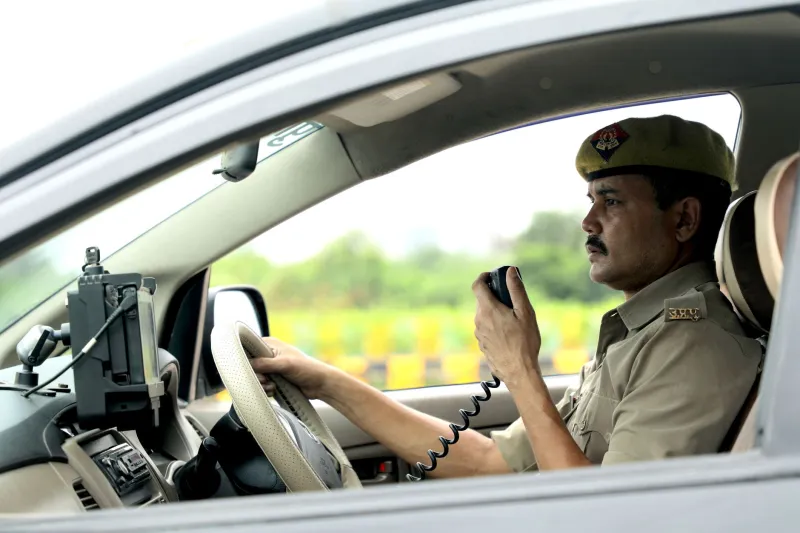
The CB radio added another dimension entirely. The citizens band radio craze of the mid-1970s — fueled partly by the 55 mph national speed limit introduced during the 1973 oil crisis — turned the American highway into a real-time information network. Truckers had been using CB radios for years, and their vocabulary for speed enforcement was already rich: "Smokey" for state troopers, "bear in the air" for aerial enforcement, "plain wrapper" for unmarked cars. When that language spread to regular drivers, millions of people suddenly had access to crowd-sourced traffic enforcement data.
Driving through a stretch of interstate in 1977 meant listening to a running commentary from other drivers about what lay ahead. "Smokey's sitting at the 47-mile marker, eastbound" was useful information, shared freely, as a kind of civic gesture between strangers who'd never meet.
The Art of Reading the Road
Beyond the technology, there was a whole body of informal knowledge that serious drivers accumulated and passed on. This wasn't written down anywhere — it lived in conversations between fathers and sons on long road trips, in the advice of experienced truckers at roadside diners, in the accumulated observations of people who spent serious time behind the wheel.
You learned to watch for the silhouette of a cruiser tucked behind an overpass abutment. You noticed when a stretch of highway straightened out after a long curve — a classic spot for stationary enforcement because the officer could see approaching vehicles from a distance. You knew that certain jurisdictions were notorious for aggressive ticketing, often small towns along major routes where traffic fines supplemented municipal budgets. You recognized the faint glare of headlights in a median turnout at dusk.
This was genuine situational awareness, developed over years of paying close attention. It made better drivers in a real sense — not just at avoiding tickets, but at reading the road environment as a whole. The driver who noticed the unmarked cruiser also noticed the deer at the tree line and the black ice on the bridge.
When the Law Fought Back
Authorities weren't passive about the radar detector culture. Several states moved to ban the devices outright — Virginia and Washington D.C. made them illegal for passenger vehicles, a status that persists today. The Federal Communications Commission periodically revisited regulations around CB radio usage. Law enforcement agencies switched from radar to laser (lidar) technology, which was significantly harder for conventional detectors to catch in time to be useful.
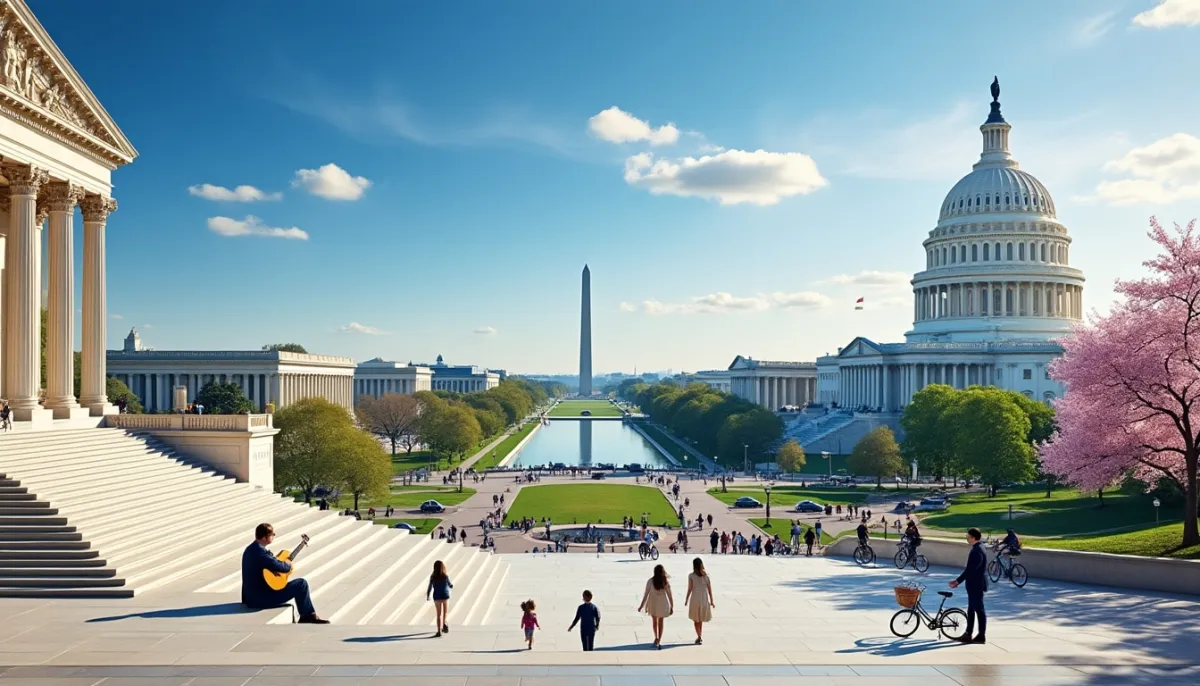 Photo: Washington D.C., via washingtondcview.com
The counter-response from the detector industry was rapid. Laser detectors appeared. Detector-detectors — devices used by police to identify drivers using radar detectors in states where they were banned — were met with detector-detector-detectors. The arms race had its own absurd momentum.
By the 1990s, the Valentine One had become something close to a cult object among serious driving enthusiasts — a detector with directional arrows that showed you not just that radar was present but where it was coming from. Owning one was a statement about how seriously you took the whole enterprise.
How a Smartphone Ended the Whole Game
Waze launched in the United States around 2009 and achieved mainstream adoption over the following few years. Its crowd-sourced hazard reporting included police locations, reported in real time by other drivers. Google Maps eventually added similar features. Suddenly, the information that used to require a CB radio, a quality detector, and years of road experience was available to anyone with a smartphone mounted to their windshield.
The radar detector market didn't disappear — it still exists, and serious enthusiasts still use high-end units. But the culture around it collapsed almost immediately. You no longer needed to learn how to read the road for enforcement patterns. You didn't need to know what K-band versus X-band meant, or how to adjust your detector's sensitivity for urban versus highway environments. The app told you. Simple as that.
The CB radio had already faded by then, overtaken by cell phones and the general decline of long-haul trucking culture in popular consciousness. The last of the three pillars — the hard-won road instincts passed between generations — didn't disappear exactly, but they stopped being necessary in the same way. Why develop a skill when the algorithm handles it for you?
What the Algorithm Can't Replace
There's something worth sitting with in that question. The old radar detector culture was adversarial, sure — drivers trying to outsmart enforcement, enforcement trying to outsmart drivers back. But it was also a community. CB warnings about speed traps were a form of mutual aid among strangers. The knowledge of how to read a highway for hidden cruisers connected drivers to their environment in a way that staring at a GPS map simply doesn't.
The Waze notification that pops up as you approach a known speed trap location is genuinely useful. It's also completely passive. You didn't earn it. You didn't develop any skill to receive it. The road didn't teach you anything.
For the generation that grew up with the Fuzzbuster on the dash and the CB crackling with bear reports, that's a real loss — even if it's hard to argue against the convenience of what replaced it. The cat-and-mouse game that defined American highway culture for forty years ended not with a confrontation but with an app update. And the road got a little quieter for it.