Two Hours or Never: How America's Need for Speed Turned Patience Into a Lost Skill

Two Hours or Never: How America's Need for Speed Turned Patience Into a Lost Skill
Somewhere in California right now, a person is furious. Their package — ordered forty minutes ago — is showing as "out for delivery" but the tracker hasn't updated in twenty-two minutes. They've already refreshed the app three times. They're considering leaving a one-star review.
The package will arrive before dinner.
This is where we've landed after 200 years of relentless, extraordinary progress in the delivery of goods across America. We have compressed weeks into hours, miles into minutes, and somehow arrived at a place where none of it is fast enough.
When a Letter Was a Miracle
In 1800, if you wanted to send a message from New York to the Mississippi River, you handed it to a rider and hoped for the best. Depending on weather, road conditions, and the temperament of the horse, your letter might arrive in two weeks. It might arrive in a month. It might not arrive at all.
People planned their lives around this reality. Business decisions, family news, legal matters — everything operated on a timeline that assumed communication would be slow. You wrote a letter knowing the person receiving it would be living in a different moment entirely by the time they read it. There was a built-in grace period baked into every transaction, every relationship, every expectation.
Patience wasn't a virtue in early America. It was a survival skill.
The Pony Express and the Art of the Near-Impossible
When the Pony Express launched in April 1860, it was treated as a technological marvel — and it genuinely was. Riders on fresh horses, relay stations every ten to fifteen miles, covering nearly 2,000 miles between Missouri and California in roughly ten days. The inaugural run carried letters that had previously taken three weeks by stagecoach.
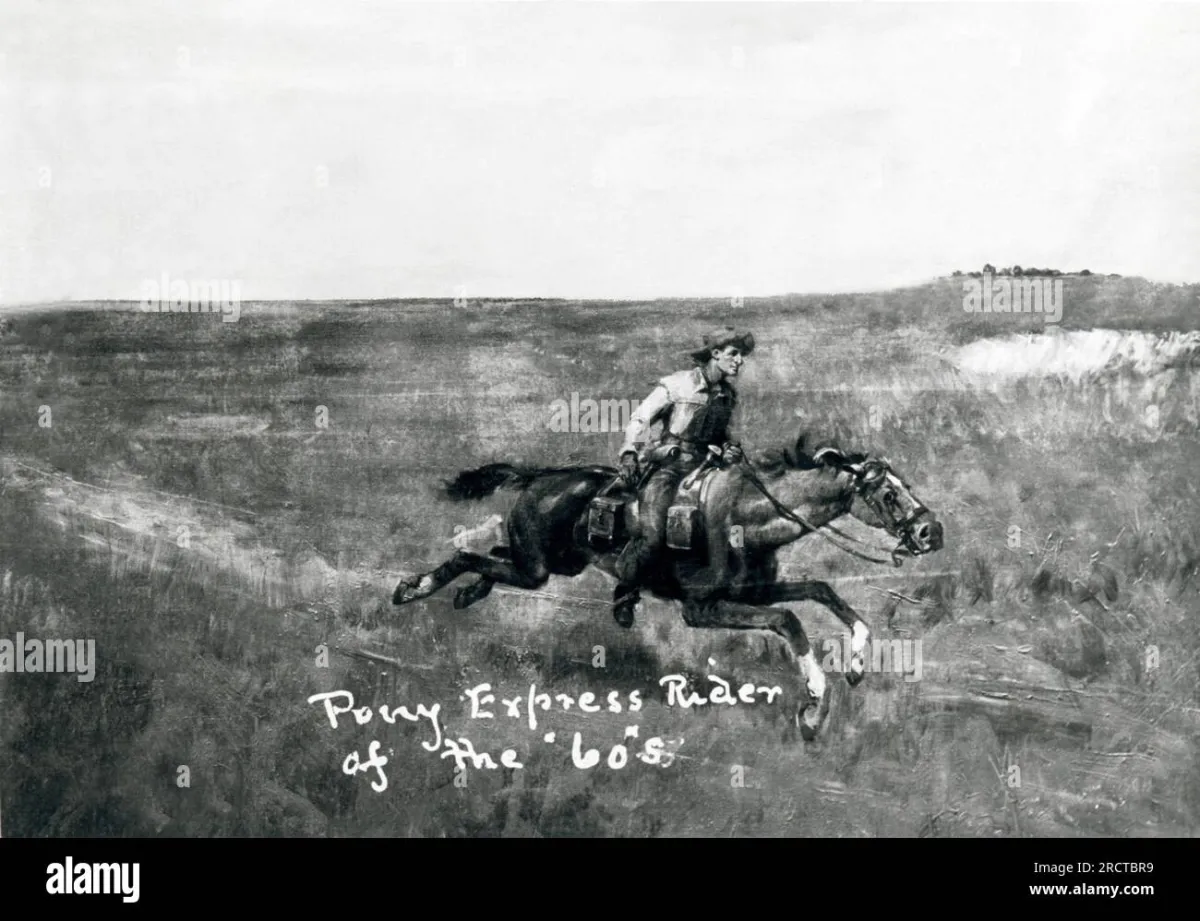 Photo: Pony Express, via c8.alamy.com
The country was electrified. Newspapers ran breathless accounts of the speed. Ten days! St. Joseph to Sacramento in ten days!
 Photo: St. Joseph, via i.etsystatic.com
The Pony Express lasted eighteen months before the transcontinental telegraph made it obsolete. The telegraph compressed ten days into ten seconds, and suddenly ten days felt like an eternity. The shift in expectation happened almost overnight.
This is the pattern. Every time delivery got faster, the previous speed became unacceptable.
Rail, Air, and the FedEx Overnight
Railroads changed everything again. By the 1870s, goods and mail that once took weeks by wagon could move coast to coast in under a week. By the early 20th century, air mail was cutting that to days. By 1973, FedEx had introduced the overnight envelope — a service so audacious that its founder, Fred Smith, reportedly received a C on the business school paper where he first proposed it.
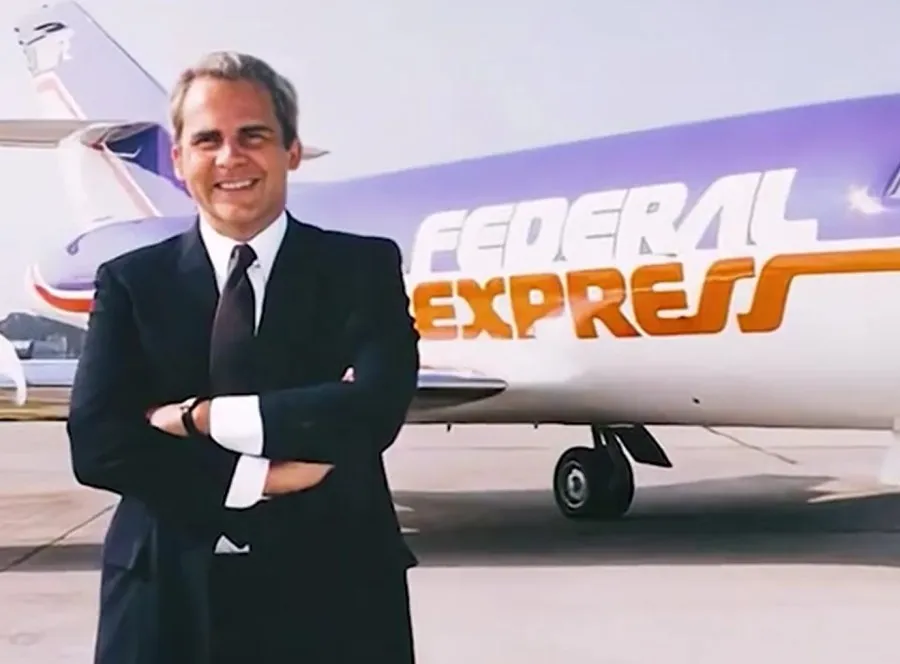 Photo: Fred Smith, via wreg.com
And yet within a decade, overnight delivery had become not a luxury but a baseline expectation for American business. The week-long turnaround that had been standard for a century became a competitive disadvantage almost overnight.
Each leap forward in speed didn't satisfy the American appetite for faster delivery. It recalibrated it.
Amazon and the Two-Day Ceiling
When Amazon Prime launched in 2005 with free two-day shipping, it didn't just change how people shopped online. It rewired how people thought about receiving things they'd ordered. Two days became the ceiling — the maximum acceptable wait. Anything longer started to feel like a failure.
Within a few years, Amazon was offering same-day delivery in major markets. Then two-hour delivery windows through Prime Now. Then the introduction of drone delivery programs promising sub-30-minute drop-offs for eligible items.
At every stage, the new speed became the new normal almost immediately. Two-day shipping, which would have sounded like science fiction to a 1990 catalog shopper, is now the thing people complain about when they can't get same-day.
The Psychology of the Shrinking Window
What's happening here isn't ingratitude, exactly. It's a well-documented psychological phenomenon called the hedonic treadmill — the human tendency to adapt quickly to improvements and return to a baseline level of satisfaction regardless of how much things improve.
In other words: we get used to good things fast. Faster than the good things themselves arrive, sometimes.
Researchers who study consumer behavior have found that the relationship between delivery speed and customer satisfaction is nonlinear. Getting something faster makes people happy — but only briefly, and only until the new speed becomes expected. At that point, delivering at the new speed produces no satisfaction at all. It's simply the minimum required to avoid dissatisfaction.
The faster things get, the more impatient people become. The more impatient people become, the faster things need to get. It's a loop with no obvious exit.
What We Lost in the Compression
There's a real cost to all of this beyond the philosophical. The infrastructure required to deliver a package in two hours instead of two days is dramatically more resource-intensive — more vehicles, more drivers, more distribution centers, more fuel, more packaging. The environmental footprint of same-day delivery is substantially larger than standard shipping, and studies have shown that the last mile of delivery — the final stretch from warehouse to door — accounts for the majority of that footprint.
We're burning a lot of resources to shave hours off a timeline that already seemed impossibly fast by historical standards.
There's also something lost in the waiting itself. A generation of Americans who grew up ordering from catalogs — filling out the order form, mailing it in, and then checking the mailbox every day for three to four weeks — will tell you that the anticipation was genuinely part of the experience. The waiting gave the object weight. The arrival meant something.
The Speed That's Never Fast Enough
The Pony Express rider who covered 250 miles in a day was a hero. The FedEx driver who delivers your package overnight is background noise. The drone that drops your order on your doorstep in 28 minutes is almost, somehow, slightly irritating when it takes 35.
This is the America that two centuries of delivery innovation built: a country where extraordinary speed has become invisible, and any deviation from the extraordinary feels like failure.
We got exactly what we asked for. We just forgot to ask ourselves what we'd do once we had it.