The Sky Over Los Angeles Used to Be a Different Color — And Everyone Just Accepted It
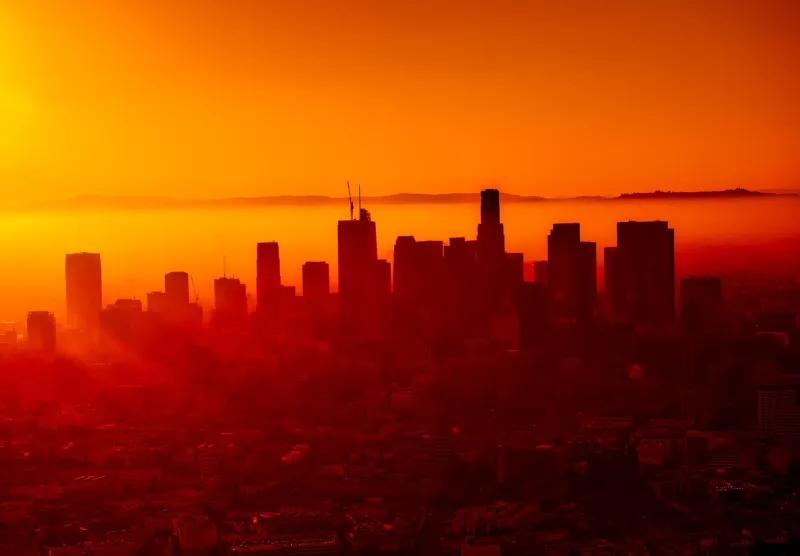
If you drove into Los Angeles on a summer afternoon in 1955, you might have mistaken the horizon for a bruise. A yellowish-brown haze sat over the basin like something had gone wrong — and something had, though nobody quite had the vocabulary for it yet. Eyes watered on the freeway. Throats tightened in the San Fernando Valley. School children were kept indoors during recess on the worst days. Doctors quietly told elderly patients and anyone with lung problems to think about moving somewhere else.
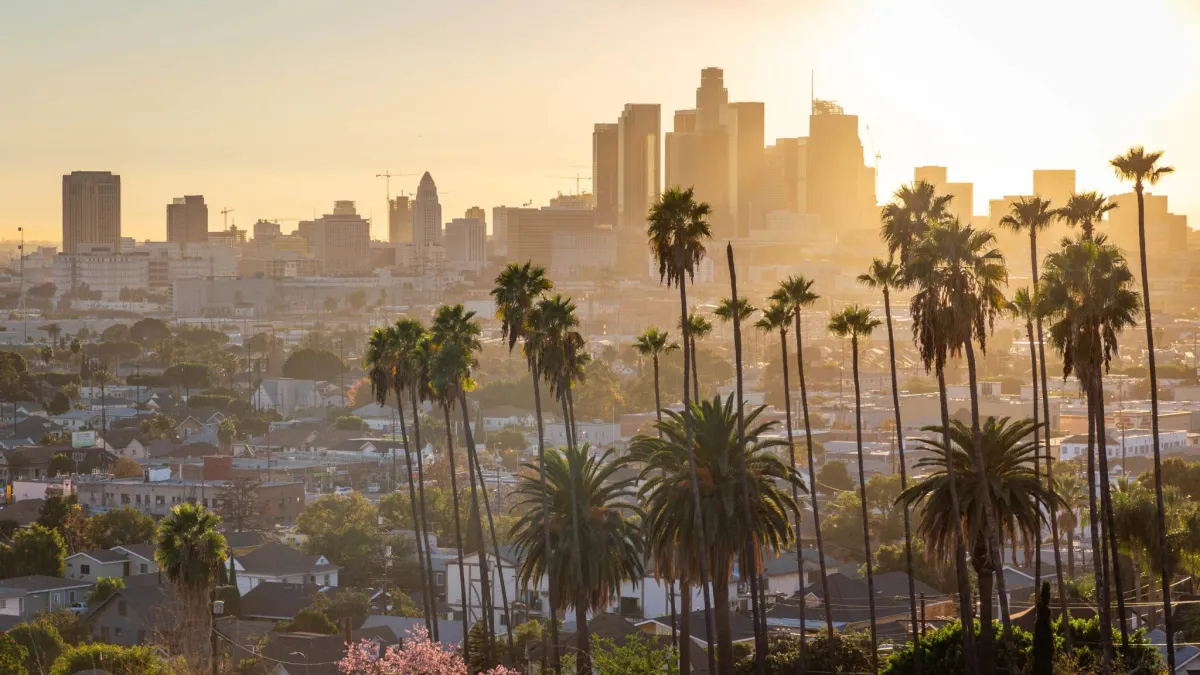 Photo: Los Angeles, via millionenfakten.de
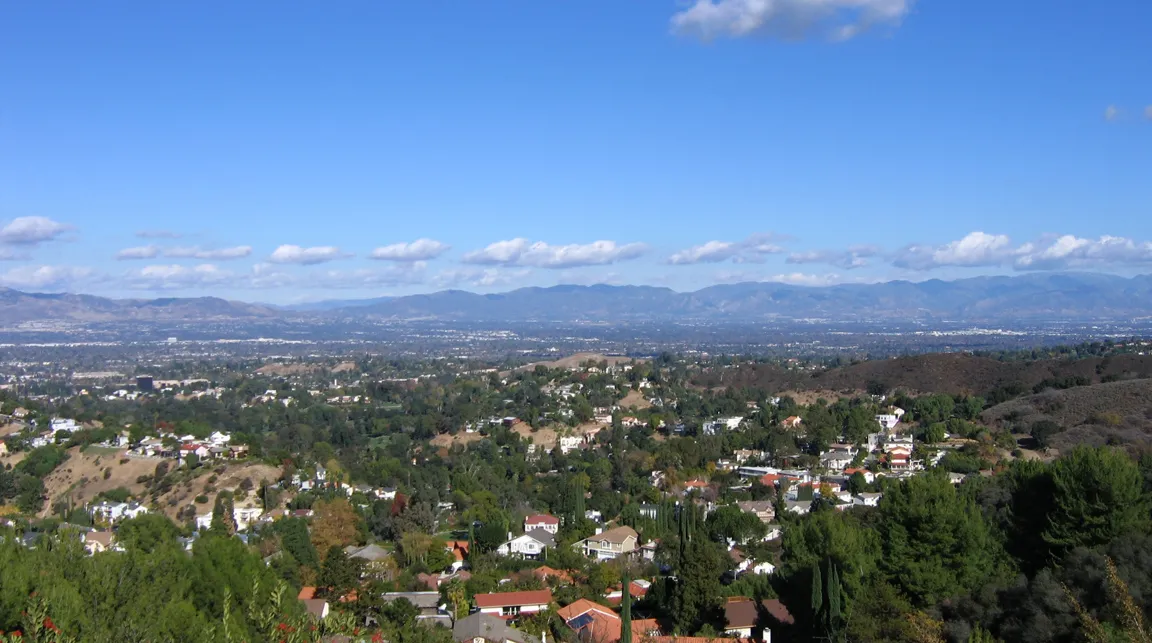 Photo: San Fernando Valley, via upload.wikimedia.org
This was not considered a crisis. It was considered Tuesday.
The Ingredients of a Poisoned Sky
Smog as Americans came to know it in the postwar decades was the product of a specific and particularly American combination: millions of cars burning leaded gasoline, heavy industry running at full capacity, and geography that made everything worse. Los Angeles sat in a natural bowl, ringed by mountains, baked by sun, and blessed with an atmospheric inversion layer that trapped pollutants close to the ground like a lid on a pot.
The chemistry was brutal. Nitrogen oxides and unburned hydrocarbons from tailpipes reacted with sunlight to create ground-level ozone — a compound that attacks lung tissue, aggravates asthma, and at high enough concentrations can cause serious respiratory damage after a single afternoon of exposure. Add in carbon monoxide, particulate matter, and sulfur dioxide from industrial smokestacks, and you had an atmospheric cocktail that would fail every modern air quality standard by enormous margins.
The term "smog" itself — a blend of smoke and fog — had been coined in London decades earlier, but American cities gave it a new and more photochemical meaning. Pittsburgh was famous for it. New York had episodes so severe that excess mortality was measurable in the days following peak pollution events. But Los Angeles became the symbol, partly because of its size and growth rate, and partly because the sunshine that made it famous also made the photochemical reactions faster and more severe.
How Bad Was Actually Bad?
Numbers help here. The EPA's current health standard for ground-level ozone — the threshold above which air quality is considered unhealthy for sensitive groups — is 70 parts per billion. On bad smog days in Los Angeles during the 1950s and 1960s, ozone concentrations regularly reached 500 to 600 parts per billion. Some peak readings hit higher.
For context, that's roughly eight times the modern danger threshold, sustained over hours on ordinary weekdays.
The 1948 smog disaster in Donora, Pennsylvania — a small industrial town in a river valley — killed 20 people outright over four days and sickened roughly half the town's population of 14,000. It is now considered one of the first American environmental disasters to force a genuine public reckoning with air pollution. At the time, the local zinc smelter's owners initially denied any connection between their emissions and the deaths.
In New York, a five-day temperature inversion in November 1953 trapped pollution over the city and is estimated to have caused somewhere between 170 and 260 excess deaths. A similar event in 1966 killed an estimated 168 people. These events were reported in newspapers and then, mostly, forgotten.
The Political Fight Nobody Remembers
The road from that poisoned sky to the relatively clean air American cities now mostly enjoy ran straight through one of the most contentious regulatory battles of the twentieth century.
California moved first, because California had to. The state created the nation's first vehicle emissions standards in the early 1960s, requiring automakers to install basic emissions controls on cars sold in the state. The auto industry fought it — not quietly, but loudly and expensively, arguing that the technology didn't exist, that costs would be prohibitive, and that the standards were scientifically unjustified.
The federal government eventually stepped in with the Clean Air Act of 1963, strengthened significantly in 1970 under the Nixon administration in the wake of the first Earth Day and a genuine national shift in public concern. The 1970 act created the Environmental Protection Agency, established national ambient air quality standards, and set a timeline for automakers to dramatically reduce tailpipe emissions.
The industry's response was, again, fierce. Executives testified before Congress that the required reductions were technically impossible. Some of the timelines were eventually adjusted. But the core mandate held, and the catalytic converter — which chemically transforms harmful exhaust gases into less harmful compounds before they leave the tailpipe — became standard equipment on American vehicles by the mid-1970s.
Leaded gasoline, which poisoned the catalysts and carried its own devastating public health burden, was phased out over the following decade. By 1996, it was gone from American pumps entirely.
What the Air Looks Like Now
The transformation is almost impossible to overstate if you didn't live through the baseline.
Los Angeles today still struggles with air quality relative to most American cities — its geography hasn't changed, and the sheer volume of vehicle traffic remains enormous. But ozone levels that once routinely hit 500 ppb now typically stay below 100 ppb, and the number of days per year exceeding federal health standards has dropped by more than 90 percent since the 1970s. The mountains east of the city, invisible on a bad smog day in 1965, are visible from downtown on most days now.
Pittsburgh, once so consistently darkened by steel mill and coal emissions that streetlights ran during the day, has been ranked among the most livable cities in America. The river valleys that once trapped industrial smoke are lined with parks.
Nationally, despite the fact that Americans drive far more miles today than in 1970 and the vehicle fleet is orders of magnitude larger, total vehicle emissions of the key pollutants have fallen by 60 to 90 percent depending on the compound. More cars, cleaner air. That's not an accident — it's the result of sustained, contested, imperfect regulatory pressure applied over fifty years.
The Progress We Forgot to Notice
There's something quietly remarkable about how little this transformation registers in American cultural memory. People remember the moon landing. They remember the interstate highway system. They don't generally remember that the air in their cities used to be measurably toxic, that children were kept inside on bad pollution days, or that doctors advised vulnerable patients to simply leave.
Maybe that's how successful public health transformations work — they become invisible precisely because they worked. The crisis recedes, the baseline shifts, and the generation that grows up breathing clean air has no frame of reference for what was there before.
But the cars that created that crisis, and the political and engineering battles that cleaned it up, are a significant part of the American automotive story. The engine that powers the freedom of the open road also, for a few decades, slowly poisoned the cities built around it.
We fixed it. That's worth knowing.