The Bill That Quietly Doubled, Then Doubled Again: How Car Insurance Became One of America's Sneakiest Household Expenses

The Bill That Quietly Doubled, Then Doubled Again: How Car Insurance Became One of America's Sneakiest Household Expenses
There's a category of expense that doesn't get the dramatic news coverage of gas prices or the viral social media outrage of a $7 coffee. It just quietly increases, year after year, billed automatically, deducted without ceremony, and absorbed into the monthly budget like background noise.
Auto insurance is the perfect example. And when you actually line up the numbers across the decades, the transformation is genuinely staggering.
What Drivers Used to Pay
In the early 1960s, a typical American driver paid somewhere between $50 and $75 per year for basic auto insurance. Adjust that for inflation and you're looking at roughly $500 to $600 in today's dollars — still dramatically less than what most American drivers are paying right now.
By the mid-1970s, annual premiums had climbed, but remained modest by modern standards. A family with two cars and clean driving records might pay a few hundred dollars a year total. Insurance was a line item on the household budget, not a category that required its own budget meeting.
Fast forward to 2024, and the national average annual premium sits at approximately $2,150 for full coverage — a figure that has risen more than 20 percent in just the last two years alone. In states like Florida, Michigan, and Louisiana, average premiums run considerably higher, with some drivers paying $4,000 or more annually. For younger drivers or anyone with a blemish on their record, the numbers climb further still.
This isn't just inflation at work. Something structural changed.
The Early Era: Coverage Was Optional, and Often Minimal
For much of the twentieth century, auto insurance requirements in the United States were either nonexistent or remarkably thin. Massachusetts was the first state to mandate liability insurance, back in 1927. Most other states didn't follow suit until decades later — and some held out until the 1980s.
When coverage was required, the minimums were modest. Many states set liability requirements at levels like $10,000 per person for bodily injury — limits that reflected the medical costs and legal environments of their era but would be laughably inadequate today.
The practical result was that millions of American drivers carried minimal coverage or none at all, and the insurance they did carry was priced accordingly. A simple liability policy was a simple, inexpensive product. The industry was competitive, regulation was light, and the pricing models were relatively straightforward.
That world is essentially gone.
How the Equation Changed
Several forces converged over the following decades to reshape auto insurance from a modest annual cost into a major household expense.
Medical costs. The single biggest driver of rising premiums is the cost of medical care. When a car accident results in injuries, the insurance company pays the medical bills. As healthcare costs in the United States escalated dramatically through the 1980s, 1990s, and beyond, the potential liability attached to every fender-bender grew with them. A collision that might have generated $8,000 in medical costs in 1985 can easily produce $80,000 in costs today.
Vehicle complexity and repair costs. A 1968 Ford Galaxie was a mechanical object that a reasonably skilled mechanic could diagnose and repair with hand tools. A 2024 vehicle is a rolling computer system with radar sensors, camera arrays, adaptive cruise control hardware, and structural materials that require specialized equipment and certified technicians to repair properly. The cost to fix a modern car after even a moderate accident has increased dramatically — and insurance premiums reflect that reality.
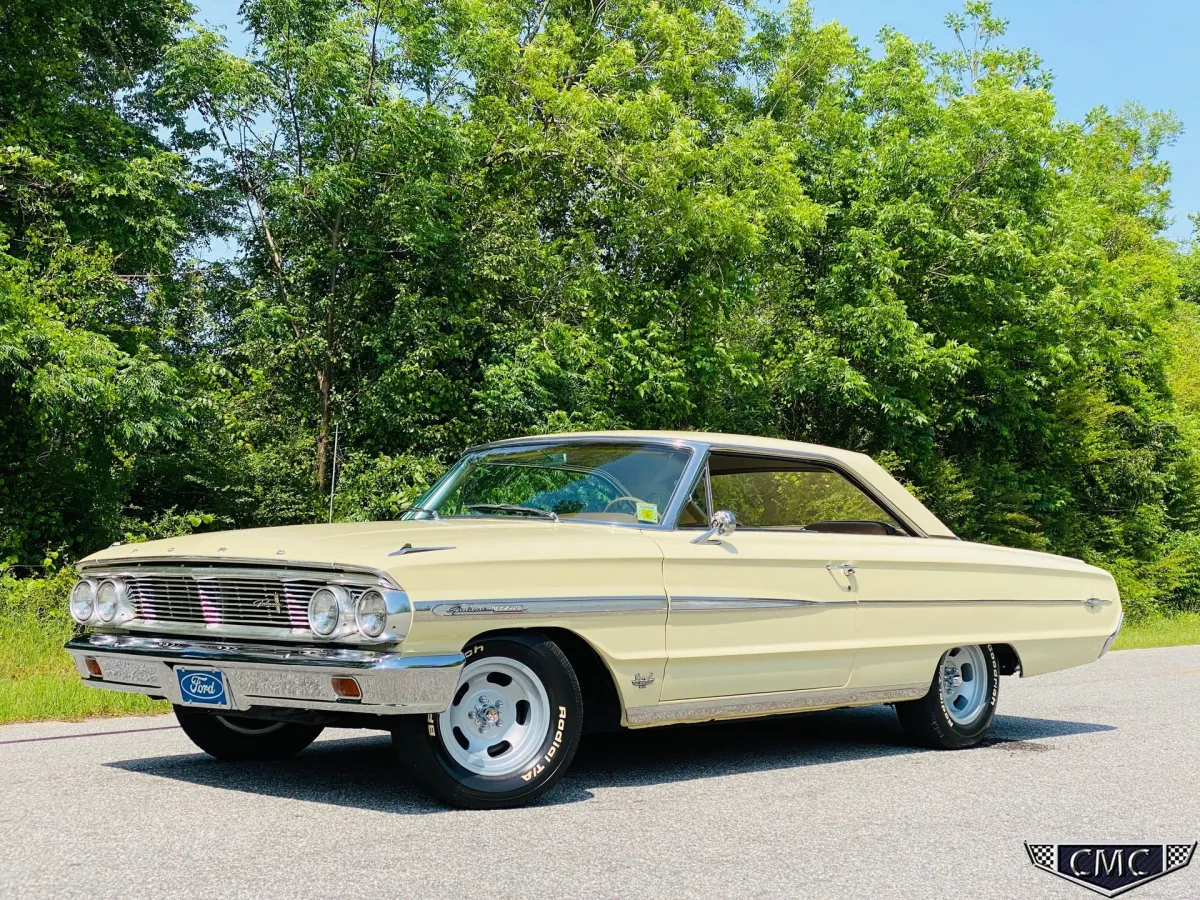 Photo: Ford Galaxie, via cdn.dealeraccelerate.com
Litigation and legal costs. The United States has one of the most litigious environments in the world, and auto accident claims are a significant piece of that picture. The rise of personal injury litigation, settlement costs, and legal fees has added substantial overhead to what insurance companies must account for when pricing policies.
Data-driven pricing. Modern insurance pricing uses algorithms that would have been unimaginable to mid-century actuaries. Your credit score, your zip code, the specific block you park on at night, your annual mileage, the claims history of your entire neighborhood — all of it feeds into a pricing model that can produce wildly different premiums for two drivers with identical records living just a few miles apart. The system is more precise than ever. It is not always more affordable.
The Real Cost of Owning a Car
Here's where the numbers get uncomfortable. When most people calculate what their car costs them, they think about the monthly payment and maybe gas. Insurance tends to get mentally filed as a fixed background cost rather than a true line item.
But for a driver in a high-cost state carrying full coverage on a newer vehicle, insurance can easily represent $200 to $350 per month. Added to a typical car payment, gas, maintenance, and registration, the total monthly cost of car ownership for many American families now exceeds $1,000 — for a single vehicle.
In 1965, a new car, a full tank of gas, and a year's worth of insurance could all be acquired for what many Americans now spend on car insurance alone in a single year.
Nobody Sent a Memo
What makes this story particularly interesting is how invisible the shift has been. Gas prices spike and it becomes a political issue. Car prices surge and it generates headlines. But insurance premiums have climbed steadily and quietly for decades, absorbed into automatic payments and renewal notices that most people sign without reading too carefully.
The cost of driving in America has transformed dramatically over the past sixty years. The car in the driveway might be safer, faster, and more reliable than anything your grandparents ever owned. But the bill to keep it on the road tells a story that rarely gets the attention it deserves.