Hands at Ten and Two Used to Actually Mean Something
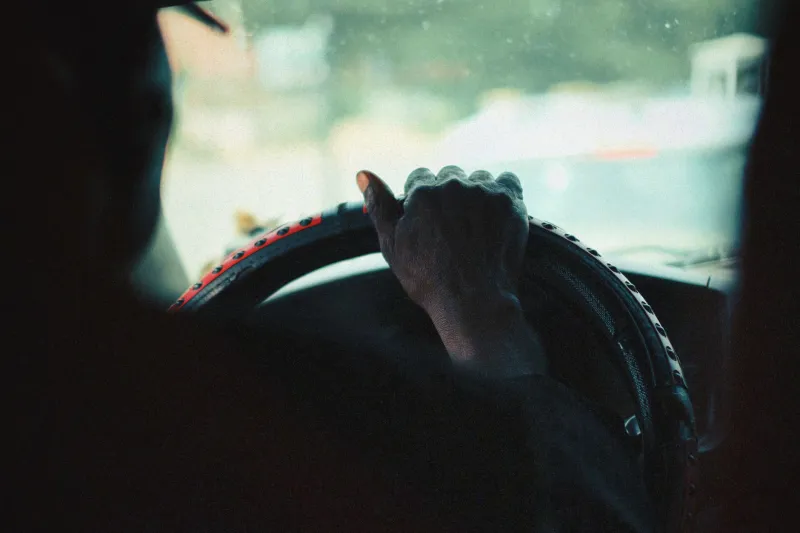
There's a generation of drivers who remember what it felt like to wrestle a car down the highway. Not in a dramatic, action-movie sense — just in the honest, physical sense of actually piloting a machine that had no interest in helping you. The steering was heavy. The brakes required commitment. And the car had absolutely no opinion about what you did next.
That era is gone. And depending on who you ask, that's either the greatest safety achievement in automotive history or the quiet death of something that made driving worth doing.
When the Car Didn't Care If You Made It
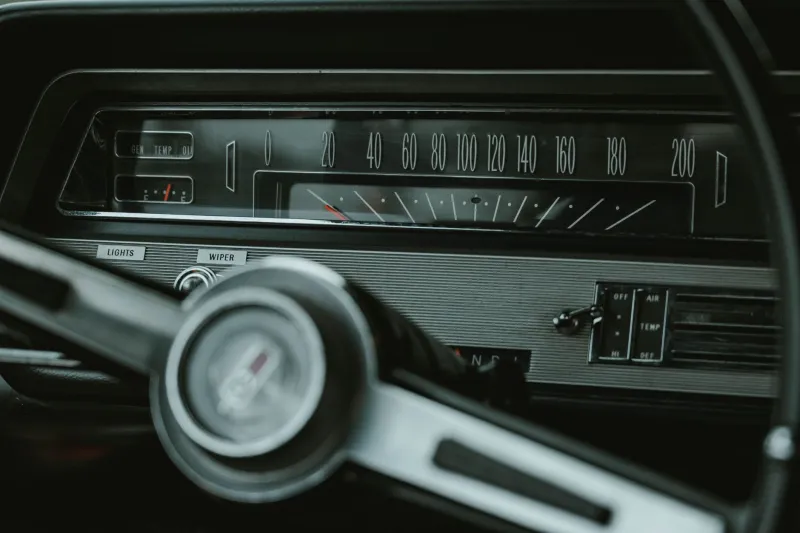
Pull up to a 1963 Ford Galaxie or a mid-sixties Chevrolet Impala without power steering and you'll understand immediately what's been lost. At low speeds, turning that wheel is a genuine physical effort. Parking required planning — you couldn't just lazily spin one hand and drift into a space. You had to commit, early, with both arms.
On the highway it was different, but not easier. Crosswinds pushed the car around. Road imperfections telegraphed straight through the wheel into your palms. You felt the road in a way that was sometimes uncomfortable and always informative. Drivers developed a kind of intuitive relationship with their vehicles — they could sense a tire going soft, feel a brake pulling left, notice a shimmy building in the front end before it became a problem.
That feedback loop was exhausting, but it was also real. You weren't just sitting in a car. You were operating one.
The Slow Handover
Power steering started appearing in American cars through the 1950s, and by the 1970s it was nearly universal. At first, it was a genuine comfort improvement — especially for larger vehicles. Nobody was mourning the loss of arm strain. But that was just the beginning of a long, incremental negotiation between the driver and the machine over who was actually in charge.
Antilock brakes arrived in mainstream American cars through the late 1980s and early 1990s, removing the need for the threshold-braking technique that driving instructors once spent real time teaching. Traction control followed. Then stability control, which became federally mandated on all new U.S. passenger vehicles by 2012. Each system was designed to catch the mistakes that drivers used to have to prevent themselves.
Then came the cameras. The sensors. The radar units tucked behind grilles. Lane departure warnings that nudge the wheel. Blind spot monitors that flash an orange light where your eyes should already be. Automatic emergency braking that stops the car when you haven't reacted fast enough — or sometimes when you have, and the system disagrees.
By the time you add adaptive cruise control that maintains following distance automatically, the modern driver on a long highway stretch is doing remarkably little. The car is monitoring, adjusting, correcting, and occasionally overriding. You're more of a supervisor than an operator.
What Drivers Actually Lost
There's a reasonable argument that all of this is straightforwardly good. U.S. traffic fatalities per mile driven have dropped dramatically over the past six decades. Distracted driving is dangerous enough without also demanding that people manually modulate brake pressure on ice. Assistance systems save lives. That's not a small thing.
But something less quantifiable has also been lost, and it shows up in unexpected places.
New drivers today often have a harder time developing spatial awareness — the instinctive sense of where the car's corners are in relation to the world around it. When sensors handle proximity, you don't build that mental map the same way. Experienced drivers from the pre-electronics era often describe modern cars as feeling somehow disconnected, like communicating through a translator rather than directly.
There's also the psychological dimension. When a car helps you constantly, you gradually stop trusting your own judgment. Drivers who've grown up with lane-keep assist have been documented drifting toward lane lines in rental cars that lack it, because they've outsourced that monitoring without realizing it. The skill atrophies quietly.
And then there's the simple pleasure of it. Ask anyone who's driven a vintage sports car with manual steering, no assists, and a gearbox that demanded full attention — they'll describe it as something closer to an experience than a commute. The car talked back. You had a conversation. You arrived somewhere having actually done something.
The Road Ahead
Full autonomy is still further away than the optimists predicted, but the direction is clear. Each new model year brings more automation, more intervention, more systems designed to remove the human variable from the equation. For urban commuters stuck in traffic, that's probably fine — nobody needs to feel connected to the road at six miles an hour on the 405.
But somewhere in that long, incremental handover, driving shifted from a skill to a habit. From something you did to something that happened around you.
The steering wheel is still there. You still hold it. But it's been a while since it told you anything true about the road beneath your tires — and even longer since it expected anything back.