When Cops Chased Speeders on Horseback: America's Wild West Approach to Traffic Enforcement
The Era of Educated Guessing
Picture this: It's 1925, and you're flying down a dusty highway in your Model T Ford, pushing all of 45 miles per hour. Suddenly, a police officer on horseback appears in your rearview mirror, frantically waving you to pull over. Welcome to America's first century of traffic enforcement, where catching speeders required more skill than technology, and the relationship between cops and drivers was intensely personal.
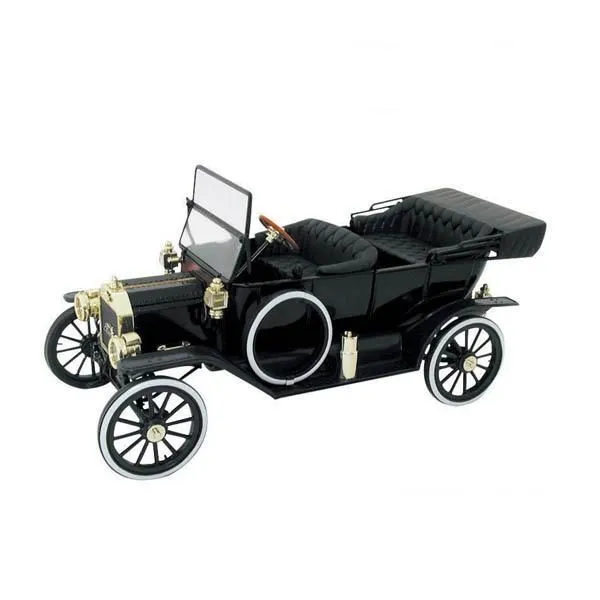 Photo: Model T Ford, via static1.topspeedimages.com
For the first half of the automotive age, speed enforcement was essentially an honor system backed by human judgment. Police officers had to rely on their eyes, their experience, and occasionally their horses to determine who was driving too fast. The idea that a machine could automatically clock your speed and mail you a ticket would have seemed like pure science fiction.
Stopwatches, Stakes, and Educated Estimates
Early traffic enforcement resembled a cross between detective work and athletic competition. Officers would position themselves along measured stretches of road, armed with nothing more sophisticated than a stopwatch and basic math skills. They'd time cars traveling between two fixed points—say, telephone poles exactly a quarter-mile apart—and calculate whether drivers were exceeding posted limits.
This method required genuine skill. Officers had to account for acceleration, deceleration, and the natural tendency of drivers to slow down when they spotted a uniform. The best traffic cops developed an almost supernatural ability to estimate speeds just by watching cars pass, a talent honed through years of practice and countless courtroom challenges.
Some departments got creative with their enforcement techniques. In California during the 1930s, officers would hide behind billboards with primitive timing devices, emerging to chase down speeders in specially modified patrol cars. Others used aircraft to time vehicles between landmarks, radioing ahead to ground units for the actual stop.
The Motorcycle Revolution
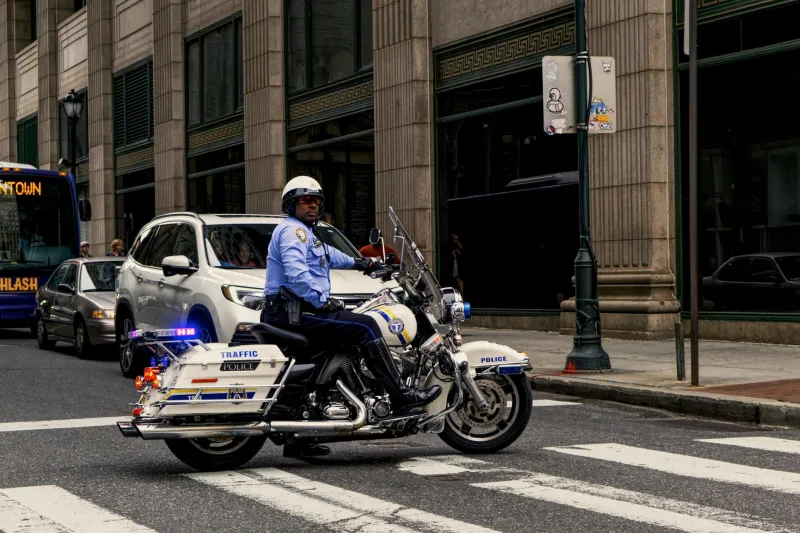
The introduction of police motorcycles in the 1920s revolutionized traffic enforcement, but not in the way you might expect. These early bikes weren't much faster than the cars they were chasing, so officers had to rely on strategy rather than raw speed. They'd position themselves at chokepoints—bridges, hills, or narrow roads where speeders couldn't escape.
Motorcycle officers became the cowboys of law enforcement, developing reputations in their communities that bordered on legendary. Everyone knew Officer Murphy's favorite hiding spots, and local drivers would flash their headlights to warn oncoming traffic about speed traps ahead. The relationship between enforcers and the public was adversarial but oddly respectful—a high-stakes game that both sides understood.
When Radar Changed Everything
The first radar speed detection equipment appeared in American police departments during the 1950s, but these early units were far from the sophisticated systems we know today. The original radar guns were bulky, unreliable contraptions that required extensive training to operate correctly. They were so temperamental that many officers continued relying on their traditional timing methods well into the 1960s.
Early radar units couldn't distinguish between multiple vehicles, leading to countless courtroom disputes about which car in a group had actually been speeding. Weather conditions affected their accuracy, and the technology was so new that defense attorneys regularly challenged radar evidence in court. For years, getting a radar-based speeding ticket was almost a guarantee of an interesting day in traffic court.
The Personal Touch of Old-School Enforcement
What made pre-radar traffic enforcement fundamentally different wasn't just the technology—it was the human element. Officers knew their beats intimately, recognizing regular commuters and understanding the rhythm of local traffic patterns. A speeding ticket wasn't just a financial transaction; it was a conversation between neighbors who happened to be on opposite sides of the law.
Police discretion played a huge role in who got tickets and who got warnings. Officers considered factors that no computer algorithm could process: Was this a local resident late for work, or an out-of-town driver showing off? Had this person been respectful during the stop? Was there a legitimate emergency?
This personal approach extended to the courtroom, where traffic judges knew both the officers and many of the defendants appearing before them. Speeding tickets were often reduced or dismissed based on character testimony that had nothing to do with actual guilt or innocence.
The Automation Revolution
Today's traffic enforcement operates in a completely different universe. Laser speed detection can clock your velocity from over a mile away with laboratory precision. Speed cameras photograph license plates automatically, generating tickets without any human officer ever seeing your face. GPS systems in patrol cars track response times and deployment patterns with military efficiency.
Modern radar units can track multiple vehicles simultaneously, distinguish between cars in different lanes, and store evidence that's virtually impossible to challenge in court. The margin for human error—and human discretion—has been systematically eliminated from the equation.
What We Gained and Lost
There's no question that modern traffic enforcement is more accurate, consistent, and fair than the old system. Automated cameras don't care about your race, your car, or your attitude—they simply record violations and generate citations with mechanical precision. The days when a charming smile or local connections could get you out of a deserved ticket are largely over.
But something intangible disappeared when traffic enforcement became automated. The personal relationship between police and the public—even an adversarial one—created a sense of community accountability that algorithms can't replicate. When Officer Johnson knew your family and understood your circumstances, traffic stops became teachable moments rather than revenue transactions.
The shift from human judgment to mechanical precision reflects a broader change in American life: our growing comfort with trading personal relationships for technological efficiency. We've gained consistency and lost community, achieved fairness and sacrificed flexibility.
The End of the Chase
Perhaps most telling is what happened to the actual pursuit of speeders. In the early days, catching someone required skill, timing, and often a dramatic chase down winding country roads. Today, many traffic violations are processed entirely by machines, with tickets arriving in the mail weeks after the alleged offense.
We've transformed traffic enforcement from a high-stakes game between humans into a automated system that operates with the emotional engagement of a parking meter. It's undeniably more effective, but somehow less interesting—and maybe that tells us something important about the price of progress.