Chrome Gods and Speed Demons: When Every Car Hood Was a Sculpture Gallery
When Cars Had Personalities
Walk through any modern parking lot, and you'll see a sea of aerodynamic anonymity. Every car looks like it was shaped by the same wind tunnel, branded with the same small, efficient logos. But flip through a car magazine from 1955, and you'll see something remarkable: vehicles that wore their souls on their hoods in the form of elaborate sculptures that would make museum curators weep.
Hood ornaments weren't just decorations — they were automotive heraldry, telling the world exactly what kind of person you were and what kind of life you aspired to live.
The Art of Automotive Ambition
It started with function. Early cars needed radiator caps, and someone had the brilliant idea to make them beautiful. By the 1920s, those humble caps had evolved into full-blown sculptures. Packard's "Goddess of Speed" showed a woman leaning into the wind, her robes flowing behind her. Chrysler's "Gazelle" captured a leaping antelope in mid-flight. Cadillac's "Goddess" stood regally with arms outstretched, blessing the road ahead.
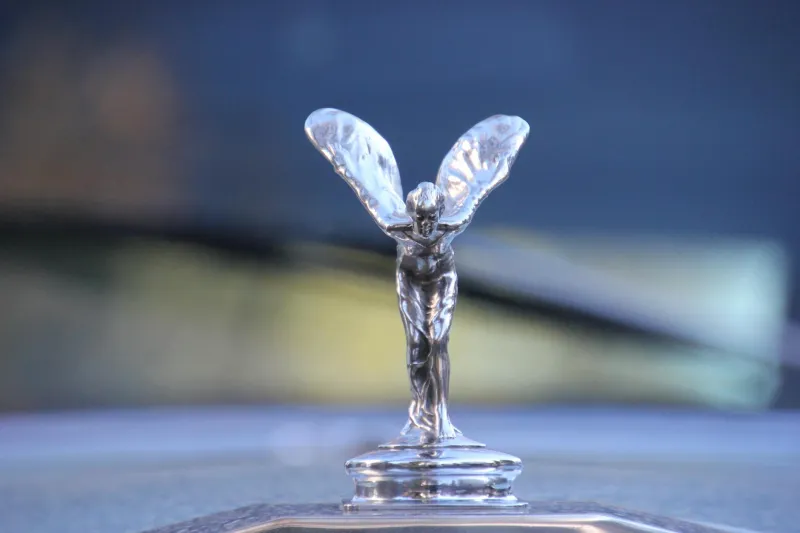
These weren't mass-produced trinkets. Many were designed by serious artists and cast in expensive materials. Lalique created crystal hood ornaments for luxury cars. Rolls-Royce's "Spirit of Ecstasy" was sculpted by Charles Sykes and became so iconic that it's still used today (though now it retracts into the hood when the car is turned off).
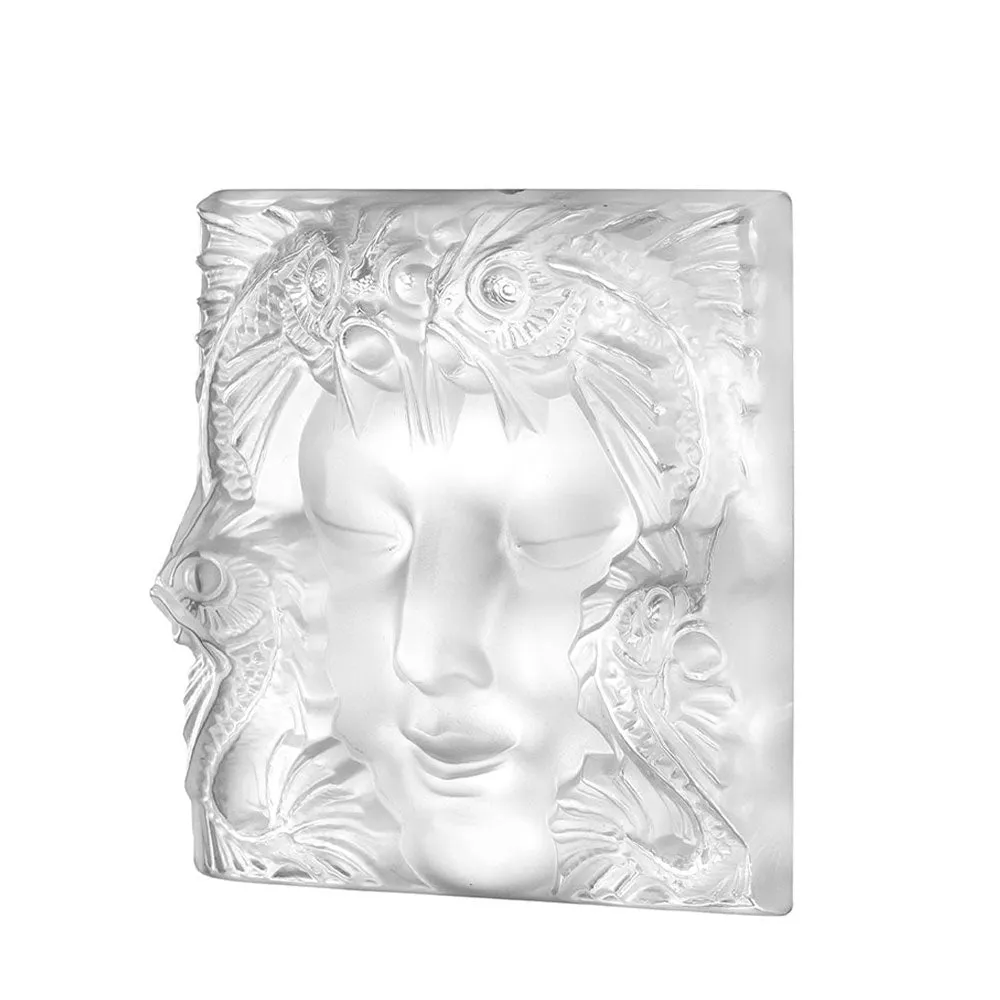 Photo: Lalique, via us.lalique.com
 Photo: Charles Sykes, via imprimis.hillsdale.edu
The ornaments told stories. Lincoln's "Greyhound" promised speed and elegance. Pontiac's "Indian Chief" evoked America's frontier spirit. Buick's "Goddess of Speed" suggested that even family sedans could be glamorous. Every morning, as you walked to your car, you were reminded of what it represented — not just transportation, but aspiration.
The Golden Age of Automotive Identity
The 1950s marked the peak of hood ornament culture. This was when American automakers fully embraced the idea that cars should be rolling sculptures, expressions of personality rather than mere appliances. The ornaments from this era reflected the optimism and ambition of post-war America.
Desoto's "Fire Dome" ornament looked like something from a rocket ship. Plymouth's "Mayflower" sailed proudly into the atomic age. Even budget brands got in on the action — Nash's "Flying Lady" proved that you didn't need to buy a luxury car to drive something with personality.
These ornaments weren't subtle. They were deliberately ostentatious, designed to catch light and draw attention. Chrome was the material of choice, polished to mirror brightness and shaped into forms that seemed to defy physics. A well-maintained hood ornament could be seen from blocks away, announcing your arrival long before anyone could see the driver.
The Language of Chrome
Hood ornaments created a visual vocabulary that Americans could read instantly. See a leaping jaguar, and you knew you were looking at elegance and performance. Spot an eagle, and you were seeing American pride made manifest. Notice a rocket ship or jet plane, and you were witnessing the space age translated into automotive form.
This visual language was so powerful that it influenced everything from fashion to architecture. The same aesthetic that put rockets on car hoods put fins on buildings and atomic symbols on everything from logos to lawn furniture. The car hood became a showcase for the American imagination, a place where dreams of speed, luxury, and progress could be literally sculpted in metal.
Even the positioning mattered. A hood ornament that pointed straight ahead suggested purpose and direction. One that seemed to be leaping or flying implied motion even when the car was parked. The best ornaments made stationary cars look like they were already traveling at highway speed.
The Safety Killers
The beginning of the end came in the 1960s, when safety advocates began pointing out an uncomfortable truth: hood ornaments were essentially spears mounted on the front of cars. In a collision with a pedestrian, these beautiful sculptures became deadly projectiles.
The 1968 federal safety standards essentially killed the traditional hood ornament. Suddenly, anything protruding from the hood had to be designed to break away or retract on impact. The flowing, permanent sculptures that had defined automotive design for decades became legal liabilities overnight.
Aerodynamics delivered the final blow. As fuel efficiency became important in the 1970s and 1980s, automakers discovered that hood ornaments created drag and reduced gas mileage. In a world where every fraction of a mile per gallon mattered, the ornaments had to go.
The Appliance Revolution
What replaced the hood ornament was efficiency — both mechanical and manufacturing. Modern cars are designed by computers to minimize wind resistance and maximize fuel economy. There's no room for artistic expression when every curve must serve an aerodynamic purpose.
The small badges that replaced hood ornaments tell a different story entirely. Instead of mythology and aspiration, they communicate brand identity and model specifications. A Mercedes three-pointed star is elegant but minimal. A BMW roundel is precise and geometric. These aren't sculptures — they're logos, designed to be recognized rather than admired.
This shift represents a fundamental change in how Americans relate to their cars. Hood ornaments suggested that your vehicle was an extension of your personality, a rolling statement about your dreams and values. Modern badges suggest that your car is a consumer choice, a rational decision based on features, reliability, and resale value.
The Death of Automotive Romance
The disappearance of hood ornaments marks the moment when cars stopped being romantic and started being practical. This wasn't necessarily bad — modern cars are safer, more efficient, and more reliable than anything from the hood ornament era. But something was lost in the translation.
Today's cars are marvels of engineering, but they're also increasingly anonymous. They're designed by global teams to appeal to global markets, resulting in vehicles that look similar whether they're sold in Detroit or Dubai. The distinctly American visual language of the hood ornament era — with its rockets, eagles, and goddesses — has no place in this homogenized world.
Occasionally, a modern car will feature a small ornament or distinctive badge, but these are pale echoes of the great sculptures that once crowned American hoods. They're design elements rather than artistic statements, decorations rather than declarations.
The next time you see a vintage car with its original hood ornament intact, take a moment to appreciate what you're looking at. It's not just automotive history — it's a relic from an era when Americans expected their cars to be beautiful, when function wasn't enough without form, and when every drive was an opportunity to display your dreams for the world to see. We gained efficiency and safety, but we lost the gods and goddesses that once blessed our daily commutes.