Loose in the Backseat: The Casual Era Before Car Seats Rewrote American Parenting
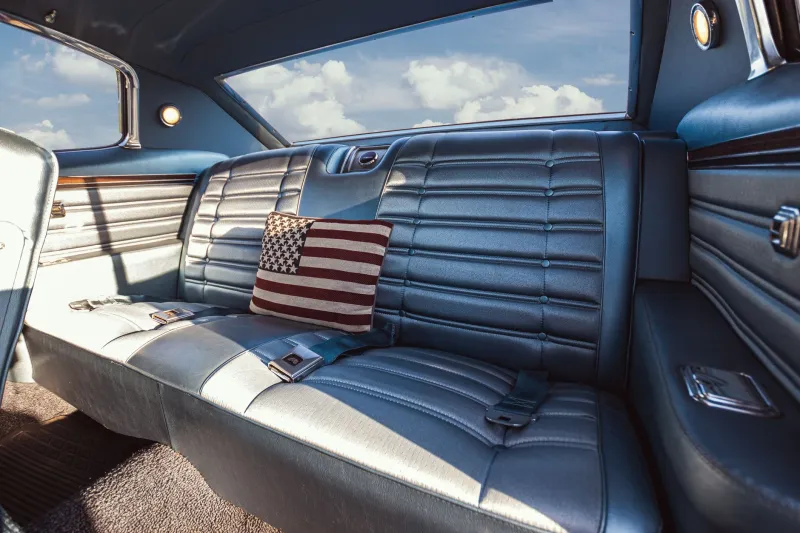
Ask anyone who grew up in America before 1985 about riding in the family car and you'll get a version of the same story. Windows down. Radio up. Rolling around the backseat like a pinball. Maybe stretched across the rear window shelf watching telephone poles go by. Nobody buckled. Nobody worried. And for the most part, nobody thought twice about it.
That world is gone so completely that describing it to a parent today sounds almost reckless. And in a measurable, statistical sense, it was. But the shift from that casual era to the one we live in now — where a car seat installation can require a certified technician and a wrong harness slot can generate genuine parental anxiety — wasn't just a safety upgrade. It was a cultural transformation that reached into how Americans think about childhood, risk, and what good parenting actually looks like.
The Pre-Regulation Backseat
Seatbelts became federally required equipment in new American cars starting in 1968. But requiring the hardware and requiring its use are two different things, and for years, most people treated seatbelts as optional accessories, like the cigarette lighter or the AM radio. Children, in particular, were almost universally unrestrained well into the 1970s.
The early child safety seats that did exist — and they go back further than most people realize, with primitive versions appearing in the 1930s — were primarily designed to keep kids contained and visible, not to protect them in a crash. Some were essentially fabric slings that hooked over the front seat back. Others were hard plastic boosters with a single bar across the front. They looked purposeful. They would not have survived a 30-mph collision in any meaningful way.
For most American families through the 1950s, 60s, and into the 70s, the standard child safety system was a parent's arm thrown across the passenger seat at stops, and the general hope that nothing bad would happen. In an era before widespread trauma research, before crash test data was public knowledge, before the nightly news ran safety segments, the risk simply didn't register the way it does today.
The Moment Everything Changed
Tennessee became the first state to pass a mandatory child restraint law in 1978. It was a quiet piece of legislation at the time, but it set off a cascade. By 1985, every state had followed. The federal government began tightening standards for the seats themselves — not just whether kids had to use them, but what those seats had to survive.
Through the 1980s and 1990s, the standards ratcheted upward steadily. Rear-facing infant seats became the recommendation for the youngest passengers. Forward-facing seats with harness systems replaced the old booster-with-a-bar designs. Height and weight guidelines got specific. Then the guidelines changed again. Then the recommendations extended to older kids, then to bigger kids, until the guidance reached a point where many pediatricians were suggesting booster seats for children up to 12 years old.
The technology improved in lockstep. LATCH anchoring systems standardized installation in 2002, replacing the seat-belt-only method that had produced a generation of dangerously misinstalled seats. Side-impact protection followed. Then anti-rebound bars. Then load legs. The modern infant car seat is an engineering project that would not have seemed out of place in a NASA procurement document.
What It Did to Parenting
The safety gains are real and well-documented. Motor vehicle crashes remain a leading cause of death for children in the United States, and the numbers are dramatically better than they were in the unrestrained era. That's not a small thing. That's lives.
But the cultural ripple effects are worth examining honestly. The car seat era arrived alongside — and arguably accelerated — a broader shift in American parenting toward formalized risk management. When keeping your child safe in a car went from intuition to instruction manual, it signaled something larger: that parenting was now a domain with correct and incorrect answers, and that the consequences of getting it wrong were serious and public.
Installation clinics at fire stations became a thing. Consumer Reports began rating car seats with the same rigor applied to refrigerators and washing machines. Online parent communities developed entire sub-cultures devoted to seat selection, harness tension, and the precise age at which rear-facing should become forward-facing. The vocabulary — chest clip, harness slot, weight limit, expiration date — became part of the standard language of new parenthood.
Expiration dates on car seats, incidentally, are one of the stranger artifacts of this transition. The seats are engineered to degrade over time — plastics weaken, foam compresses — and manufacturers began stamping use-by dates on them. The idea that a piece of safety equipment has a shelf life would have been incomprehensible to a parent in 1965. Today it's a standard part of the purchasing conversation.
The Vehicle Followed the Child
The economics of family vehicles shifted too. The rise of the minivan in the 1980s wasn't purely coincidental — it arrived precisely as car seat usage became mandatory and families discovered that fitting multiple bulky seats into a standard sedan required either a shoehorn or a vehicle redesign. The SUV boom of the 1990s continued the pattern. Families needed space not just for children, but for the equipment required to transport children correctly.
Dealerships began marketing third-row seating as a safety feature. Built-in window shades, integrated child seat anchors, and dedicated door designs became selling points. The child passenger didn't just change how we drove — they changed what we drove.
The Backseat Today
The kid rolling around the rear window shelf is a figure from another America. Today's child passenger is secured, monitored, and in newer vehicles, literally observed by a rear-seat camera that alerts parents if a child is detected after the adults have exited. Some systems beep. Some send phone notifications.
We are, by every statistical measure, doing this better than we used to. The data is unambiguous on that. But it's worth pausing occasionally to notice how completely the casual confidence of the old backseat has been replaced by a system of protocols, certifications, and equipment that would have seemed extraordinary to any parent from the first half of the twentieth century.
They loved their kids too. They just had a different relationship with uncertainty. We traded that uncertainty for something safer, and something more anxious. Most parents today would make that trade without hesitation. That, in itself, says everything about how thoroughly the backseat was remade.