That Smell Was Never Really Yours: The Manufactured Nostalgia Inside Every New Car

Ask almost any American adult to describe the smell of a new car and they'll do it instantly, confidently, and with something close to affection. It's one of those rare sensory memories that crosses generations and income brackets. The smell of a new car means something. It means possibility, arrival, reward.
Here's the uncomfortable part: what that smell actually was, and what it is now, are two completely different things. And at some point, the industry noticed how much you loved it — and started selling it back to you in a bottle.
What the Original Actually Was
The classic new car smell wasn't designed. It wasn't engineered to trigger positive associations or tested in consumer focus groups. It was simply the byproduct of how cars were built.
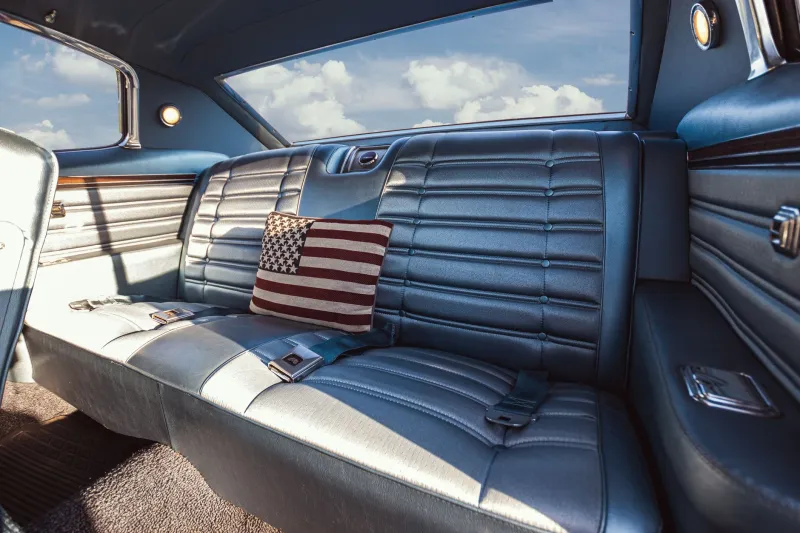
Through the 1950s, 1960s, and into the 1970s, American car interiors were assembled from materials that off-gassed heavily and honestly. Real leather seating — not bonded or synthetic, but actual animal hide — had a distinct, rich scent that aged and changed over time. Natural rubber seals and floor mats added their own sharp, almost medicinal undertone. Adhesives used to bond headliners, carpet, and trim panels were solvent-based and pungent. The foam padding under seats, the wiring insulation, the paint on interior metal surfaces — all of it released volatile organic compounds (VOCs) freely, especially in the heat of a summer afternoon with the windows up.
It wasn't subtle. Park a 1968 Pontiac GTO in the sun for two hours, open the door, and you were hit with something almost aggressive. But it was genuine. It was the honest chemical signature of real materials doing their job.
When the Smell Became a Problem
By the 1980s and accelerating through the 1990s, things changed. Environmental regulations tightened restrictions on VOC emissions from consumer products, including automotive materials. Health research began flagging some of the compounds responsible for that iconic scent as potentially harmful with prolonged exposure — formaldehyde, benzene, toluene. Manufacturers were pushed, and eventually required, to reformulate adhesives, switch to water-based coatings, and reduce off-gassing across interior components.
Simultaneously, the shift away from genuine leather toward vinyl, then toward modern synthetic textiles and leatherette, removed one of the smell's primary contributors. Real wood trim gave way to plastic simulations. The interior of a car became cleaner, safer, and more consistent — and considerably less fragrant.
The new car smell didn't disappear overnight. But it faded. And somewhere in that fading, Americans noticed something was missing.
The Commodity Play
The market responded with impressive speed. By the early 2000s, "new car smell" air fresheners were widely available at gas stations and auto parts stores across the country. Little cardboard trees. Aerosol sprays. Vent clips. The scent had been isolated, reverse-engineered, and reproduced as a product entirely separate from the thing that originally produced it.
This is where it gets genuinely interesting from a cultural standpoint. The fragrance industry worked to identify the chemical compounds most strongly associated with the original smell — specific VOCs, leather tannins, rubber compounds — and recreate them synthetically. What you're buying in that $3 spray bottle isn't new car smell. It's a laboratory approximation of a memory of new car smell, stripped of the components that made the original mildly hazardous.
Car manufacturers took it further. Some automakers began developing proprietary interior scent profiles — subtle, carefully calibrated ambient fragrances built into ventilation systems — designed to evoke quality, freshness, and premiumness without relying on any of the materials that originally produced those associations. You're not smelling the car. You're smelling a brand decision about how the car should make you feel.
What We're Actually Nostalgic For
There's a larger pattern here that goes well beyond cars. American consumer culture has spent decades replacing authentic sensory experiences with engineered approximations of them — and then selling the approximation as a premium feature. Artificial smoke flavoring on barbecue chips. Crackling sound effects added digitally to electric fireplaces. The tactile click engineered into a luxury car door's close.
With new car smell, the process is unusually transparent once you look at it. A generation fell in love with an accidental byproduct of mid-century manufacturing. Regulations and material science made that byproduct disappear. The nostalgia remained, so the industry packaged and monetized it. Now you can buy the feeling of 1967 in a spray bottle at Walmart for $4.99.
The cars are safer. The interiors are more durable. The air inside a new vehicle is genuinely less toxic than it was fifty years ago. These are real improvements that matter.
But there's something quietly revealing about the fact that we missed the fumes. That we loved a smell so much we started manufacturing it artificially and calling it an upgrade. That the sensory memory of progress turned out to be more valuable than progress itself.
Next time you crack open a new car and breathe in, it's worth knowing what you're actually inhaling — and why it smells exactly like you always hoped it would.