The Three-Point Turn That Defined You: When Parallel Parking Was a Skill Worth Bragging About
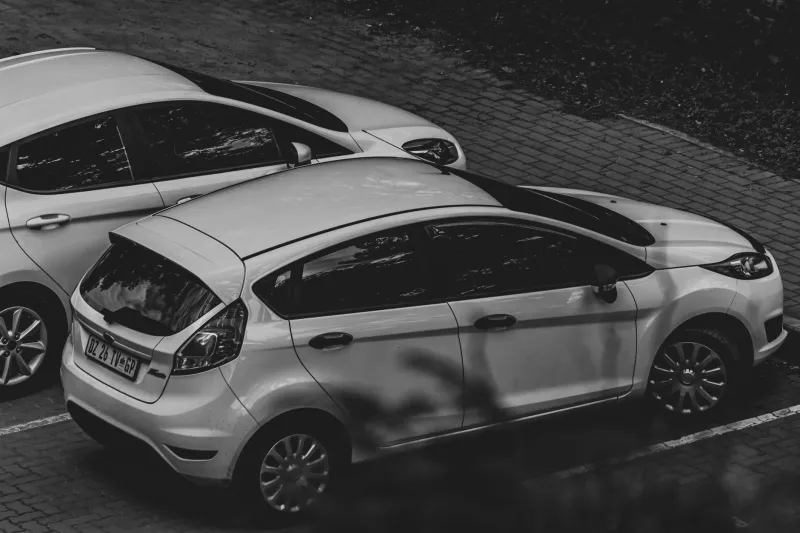
Ask anyone who learned to drive before roughly 2010 and they'll remember it clearly — the specific, low-grade dread of the parallel parking segment on the driving test. The orange cones. The examiner with the clipboard. The knowledge that everyone in the car ahead of you had just failed.
Parallel parking was the part of the test that sorted people. It was also, in a way that's hard to fully articulate, the part that meant something.
The Test That Actually Tested You
The driving exam has never been a particularly rigorous evaluation of real-world ability. Merge onto a freeway at 70 mph with a semi bearing down on your left? Not on the test. Navigate a five-way intersection during rush hour? Also not on the test. But parallel parking — the careful, judgment-dependent process of reversing a vehicle into a space between two other cars — was on the test, and it was there for a reason.
It required you to think in three dimensions without being able to see all three dimensions at once. You had to build a mental map of where your rear bumper was, how far the curb sat from your back-left tire, and how quickly the front of your car was swinging out into traffic — all simultaneously, all from the driver's seat, with nothing but mirrors and instinct to guide you.
For new drivers, this was genuinely hard. For experienced drivers who had logged years of urban driving, it became fluid and almost automatic. And that gap — between the person who could nail a tight spot in one move and the person who took four attempts and still ended up crooked — was a gap that people noticed.
Urban Driving Had Its Own Hierarchy
In American cities and dense older suburbs, parallel parking ability was a quiet but real marker of driving competence. New York, Chicago, Boston, San Francisco — these were cities where street parking was scarce, spots were tight, and the line of cars waiting behind you while you attempted to maneuver had very limited patience.
 Photo: San Francisco, via cdn.britannica.com
 Photo: New York, via theplanetd.com
Being able to drop smoothly into a space without blocking traffic, without tapping the cars fore and aft, and without requiring a running commentary from your passenger was a point of genuine pride. People bragged about it. Drivers developed their own techniques — specific reference points on their own car's hood or trunk, particular mirror angles, personal counting systems for steering wheel rotations.
These weren't tricks. They were skills, developed through repetition and refined through failure. And like most genuine skills, they carried a small but real sense of identity. You were someone who could parallel park. That meant something about the kind of driver you were.
What the Sensors Changed
Parking assist technology began appearing in luxury vehicles in the early 2000s and filtered down to mainstream models over the following decade. Rear-view cameras became federally mandated in all new U.S. vehicles sold after May 2018. Ultrasonic parking sensors, which beep with increasing urgency as you approach an obstacle, are now standard on a wide range of vehicles across every price point.
And the fully automated parking systems — where the car literally steers itself into a spot while the driver manages only the throttle and brakes — have been available on multiple mainstream models for years.
None of this is bad. Rear cameras have meaningfully reduced the number of backover accidents, particularly involving small children. Parking sensors prevent minor collisions that cost real money to repair. The technology does what it promises.
But it also did something else. It made the skill optional. And optional skills, as a rule, stop being practiced. And skills that stop being practiced eventually stop being skills.
The Broader Disappearing Act
Parallel parking is a small example, but it points toward something larger that's been happening quietly in the relationship between American drivers and their cars.
For most of automotive history, driving demanded a continuous stream of small judgments. You had to read the road surface and adjust your following distance. You had to manage engine temperature manually on long climbs. You had to navigate by landmark and intuition when you didn't know the route. You had to sense, through the steering wheel and the seat of your pants, what the car was doing and what it needed.
Modern vehicles have been absorbing those judgments one by one. Adaptive cruise control manages following distance. Traction control catches the slides you used to have to catch yourself. GPS navigation means you never have to build a mental map of a city. Lane-keep assist nudges you back when your attention drifts.
Each individual feature is a reasonable response to a real problem. Taken together, they represent a fundamental shift in what driving actually requires of a human being.
What Gets Lost When the Machine Takes Over
There's a version of this story that's straightforwardly positive — technology made driving safer, reduced fender-benders, and removed a source of stress from millions of daily commutes. That version is true.
But there's another version, equally true, about what happens when a generation of drivers never develops the spatial awareness, the mechanical intuition, or the low-level competence that came from actually having to do hard things with a car.
Parallel parking wasn't just about parking. It was a small but genuine exercise in vehicle control, spatial reasoning, and composed performance under mild pressure. The person who could do it well had, in the process of learning to do it well, become a slightly better driver in ways that extended beyond parking.
The cones at the DMV are still there in most states. The test is still technically on the books. But an increasing percentage of drivers taking that test are doing so in vehicles equipped with sensors that guide them through it — and then returning to daily driving in vehicles that will guide them through it every time thereafter.
The skill is fading. Quietly, without ceremony, absorbed into a system that no longer requires it.
Somewhere, a middle-aged driver is still secretly proud of being able to nail a tight spot in one move. They probably always will be. But they're increasingly alone in caring about it.