When Listening to Music While Driving Was Considered Dangerous as Drunk Driving
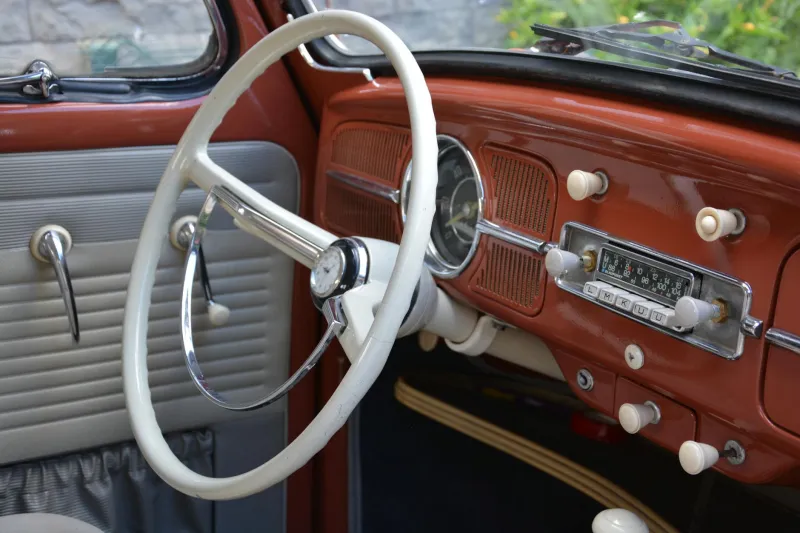
Picture this: It's 1932, and you've just installed the latest technological marvel in your automobile — a radio. Your neighbors gather around your driveway, marveling at the wooden dashboard housing this miraculous device that can pull music and voices from the air while you drive. But not everyone is impressed. In fact, many people think you've just turned your car into a rolling death trap.
The Radical Idea of Mobile Entertainment
Before we carried entire music libraries in our pockets, before satellite radio and Spotify playlists, there was the car radio — and it was absolutely revolutionary. Today, driving without music or podcasts feels unnatural, almost primitive. But in the early 1930s, the concept of consuming entertainment while operating a vehicle was so foreign, so potentially catastrophic, that it sparked genuine moral panic.
The first car radios weren't sleek dashboard installations. They were bulky, expensive contraptions that required separate batteries, external antennas, and professional installation. A car radio in 1930 cost about $130 — roughly $2,000 in today's money. You weren't just buying a radio; you were making a statement about the future of transportation.
America's First Distracted Driving Debate
The backlash was swift and severe. Safety experts argued that drivers couldn't possibly maintain focus on the road while listening to music or radio programs. Police departments reported that radio-equipped cars were involved in more accidents. Lawmakers in several states introduced bills to ban car radios entirely.
The concerns weren't entirely unfounded. Early car radios were genuinely distracting. Drivers had to manually tune stations using finicky knobs, adjust volume constantly to compensate for engine noise, and deal with static that required constant antenna adjustments. Unlike today's preset buttons and steering wheel controls, operating a 1930s car radio demanded sustained attention and physical manipulation.
But the opposition went far beyond practical safety concerns. Moralists worried that car radios would corrupt American youth, allowing young people to listen to jazz and other "inappropriate" music without parental supervision. Religious leaders feared that families would stop attending church if they could hear Sunday services from their automobiles. Civic groups argued that mobile entertainment would destroy community bonds and shared cultural experiences.
The Technology That Changed Everything
Despite the controversy, car radios caught on rapidly. By 1940, over 70% of new cars came equipped with radios. The technology improved dramatically throughout the decade. Push-button tuning replaced manual dials. Better speakers and amplifiers made music audible over road noise. Installation became simpler and cheaper.
World War II temporarily halted civilian car radio production, but returning soldiers had experienced mobile communication technology and demanded it in their personal vehicles. The post-war boom made car radios standard equipment rather than luxury accessories.
The 1950s brought FM radio, which offered superior sound quality and introduced Americans to new musical genres. Teenagers discovered that cars equipped with radios became mobile social spaces, places where they could listen to rock and roll away from disapproving adults. The car radio didn't just change how Americans consumed entertainment — it transformed youth culture entirely.
From Revolutionary to Invisible
By the 1960s, the great car radio debate was forgotten. The device that once threatened civilization had become as essential as headlights or windshield wipers. Automakers competed on radio quality and features. AM/FM became standard, followed by cassette players, CD changers, and eventually satellite radio.
Today, traditional car radios face their own obsolescence crisis. Streaming services, podcasts, and smartphone integration have made broadcast radio feel antiquated. Young drivers often ignore radio entirely, preferring curated playlists and on-demand content. The revolutionary technology of the 1930s now seems quaint and limited.
The Pattern of Panic
The car radio controversy reveals a familiar pattern in American technology adoption. Every generation identifies certain innovations as uniquely dangerous or morally corrupting. Telegraph operators worried that telephone would destroy written communication. Television critics predicted the end of reading. Today's concerns about smartphone distraction echo the exact same arguments made against car radios ninety years ago.
What seems most striking is how completely we've forgotten this debate. The car radio went from civilization-ending threat to invisible necessity within a single generation. Most drivers today couldn't imagine operating a vehicle without some form of audio entertainment, yet their grandparents lived through the heated public discourse about whether such technology should be legal.
The Speed of Acceptance
Perhaps the most remarkable aspect of the car radio story isn't the initial resistance, but how quickly that resistance evaporated. Within two decades, the device went from controversial luxury to expected standard equipment. The same lawmakers who tried to ban car radios were soon campaigning with radio advertisements played in those very same vehicles.
This rapid acceptance pattern would repeat with air conditioning, power steering, automatic transmissions, and countless other automotive innovations. Each new technology faces initial skepticism, practical challenges, and moral objections before becoming so commonplace that we forget it was ever controversial.
The next time you automatically connect your phone to your car's audio system or ask Siri to play a specific song while driving, remember that you're participating in a tradition that once scandalized America. The simple act of consuming entertainment while driving — something that feels as natural as breathing — was once considered as reckless and dangerous as any driving behavior we condemn today.