When Gas Stations Actually Served You: The Death of America's Last Genuine Customer Service
The Last Stand of Personal Service
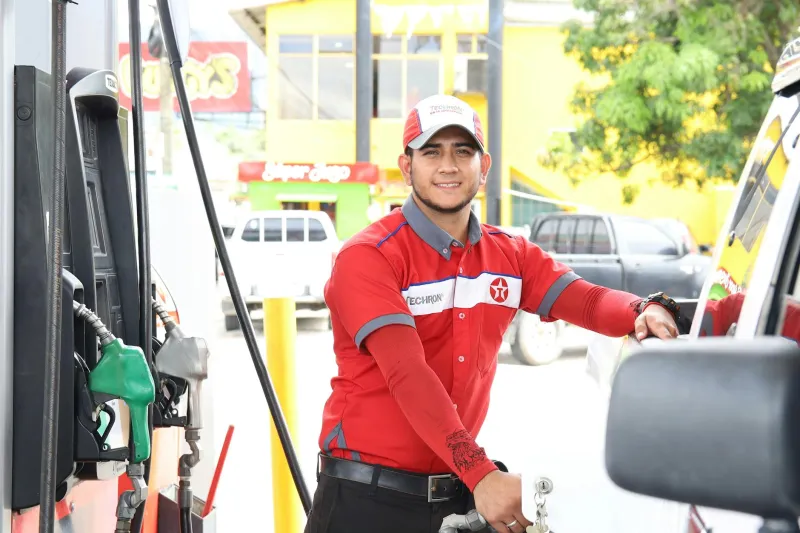
Picture this: You pull into a gas station, and before you can even turn off the engine, a uniformed attendant is already at your window with a smile and your name on his lips. "Fill 'er up, Mr. Johnson? Want me to check under the hood while I'm at it?" He knows you drive a '72 Buick that burns a quart of oil every thousand miles, that your wife prefers the windows squeegeed in circular motions, and that you're probably heading to your mother-in-law's house every other Sunday.
This wasn't some premium luxury service. This was Tuesday afternoon in America for most of the 20th century.
More Than Just Gas
The full-service gas station was essentially a neighborhood institution disguised as a business. These weren't just places to buy fuel — they were community hubs where relationships formed over routine maintenance. Your gas station attendant was part mechanic, part neighbor, part automotive therapist who listened to your complaints about that weird noise the transmission was making.
Attendants didn't just pump gas. They checked your oil, tested your tire pressure, cleaned your windshield, and inspected your belts and hoses. Many could diagnose engine problems by sound alone and knew which local shops could fix whatever was wrong. Some stations even offered minor repairs, tire changes, and emergency roadside assistance as standard practice.
The ritual was almost ceremonial. You'd pull up to the pump, roll down your window, and engage in a brief but genuine human interaction that acknowledged you as more than just a credit card number. "How's that radiator been treating you?" "Tell your wife I found those spark plugs she wanted." "You might want to think about new tires before winter hits."
The Economics of Attention
Full-service wasn't just about friendliness — it was good business. Gas stations made most of their money on service and repairs, not fuel sales. Gasoline was often a loss leader to get customers in the door. The real profit came from oil changes, tune-ups, tire sales, and the dozens of small services that kept cars running.
Attendants were incentivized to build relationships because repeat customers meant steady income. They remembered which customers needed oil every 3,000 miles, who had chronic brake problems, and whose teenage kids were learning to drive. This personal knowledge translated directly into sales and customer loyalty.
Stations competed on service quality, not just price. You'd choose your gas station based on whether the attendants knew their stuff, treated you fairly, and could be trusted with your car. Some families stayed loyal to the same station for decades, passing that relationship down through generations.
The Self-Service Revolution
The first self-service gas station opened in Los Angeles in 1947, but the concept didn't really take off until the oil crises of the 1970s. Suddenly, saving fifteen cents per gallon mattered more than having someone check your oil. The economics were brutal and simple: self-service meant lower overhead, which meant lower prices.
The transition wasn't immediate or universal. Many states actually banned self-service pumps, viewing them as unsafe or job-killing. Oregon and New Jersey still prohibit self-service today, offering a glimpse into what we lost. But economics eventually won out almost everywhere else.
By the 1980s, most gas stations had converted to self-service or hybrid models. The attendants who remained were often relegated to working the register inside, far removed from the personal interactions that once defined the experience.
What We Traded Away
The death of full-service gas stations represents something larger than just a change in how we buy fuel. It marked the beginning of the end for routine, personal customer service in everyday American life. Think about it: when was the last time a service worker proactively helped you without being asked? When did someone last remember your preferences without consulting a computer?
We gained convenience and lower prices, but we lost something harder to quantify. Those brief interactions with gas station attendants were often the only personal customer service many Americans experienced regularly. They provided a sense of being known and valued in an increasingly impersonal world.
The automotive knowledge transfer was also significant. Gas station attendants served as informal mechanics educators, teaching customers basic car maintenance and helping them understand their vehicles. That knowledge largely disappeared when we started pumping our own gas and consulting YouTube for car advice.
The Digital Echo
Today's gas stations optimize for speed and efficiency. You tap a credit card, pump your gas, and leave without speaking to another human being. The closest thing to personal service is a loyalty program that tracks your purchases and offers discounts based on algorithms, not relationships.
Some premium stations have tried to recreate elements of full-service — luxury car washes, convenience stores, even concierge services. But these feel artificial compared to the organic relationships that developed naturally when service was simply part of the transaction.
The Last Full-Service Generation
Anyone under 40 has likely never experienced true full-service gas. For them, pumping gas is just another mundane chore, like using an ATM or scanning items at self-checkout. They can't miss something they never had.
But for those who remember, there's a lingering sense that we traded away something valuable. Not just the service itself, but the idea that routine transactions could also be human interactions. That businesses could know their customers as people, not data points.
The full-service gas station represents a different philosophy about commerce — one where efficiency wasn't the only value that mattered. Sometimes, the old way really was better, even if we can never go back.