The Quarter That Bought Freedom
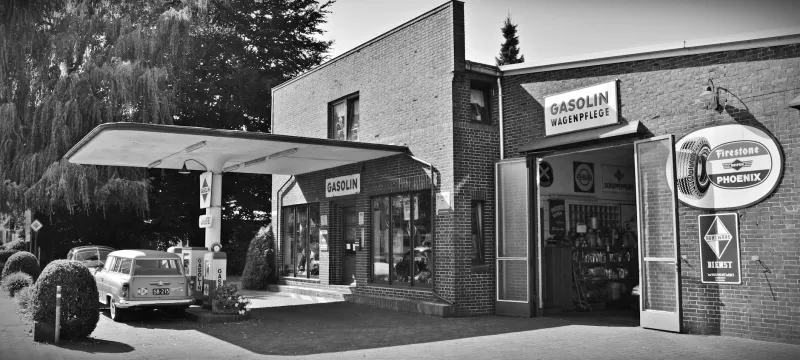
Picture this: You're cruising through 1959 America, and your gas gauge needle is kissing empty. You pull into a Texaco station, where the attendant — yes, there's always an attendant — fills your tank, checks your oil, and cleans your windshield. Your bill for 12 gallons? Three dollars. The movie you're heading to see afterward costs more per ticket.
This wasn't some Depression-era anomaly or wartime rationing period. This was normal American life for decades. Gas was so cheap that families planned cross-country vacations around scenic routes rather than fuel efficiency. The phrase "gas money" barely existed because gas money was pocket change.
When Detroit Sold Dreams, Not MPG
Cheap fuel didn't just change how Americans drove — it completely rewired how Detroit thought about cars. In the 1950s and 60s, automakers competed on style, power, and prestige. Fuel economy was marketing poison. Who wanted to buy a car that suggested you couldn't afford to fill it up?
Chevrolet advertised engines by their cubic inches, not their miles per gallon. The bigger, the better. The 1970 Plymouth 'Cuda came with a 440 Six Pack engine that got roughly 8 miles per gallon, and that was considered perfectly reasonable. Gas was 36 cents a gallon. A full tank in that muscle car cost less than $7.
Meanwhile, European and Japanese manufacturers were already engineering smaller, more efficient engines. Americans looked at those cars and wondered why anyone would choose to drive something so underpowered when gas was practically free.
The Suburban Explosion That Cheap Gas Built
Those quarter-a-gallon prices didn't just influence car design — they literally shaped where Americans lived. Cheap gas made the daily commute affordable, which made suburban sprawl possible, which made the American Dream attainable for millions of families.
Developers could build subdivisions 30, 40, even 50 miles from city centers because they knew buyers wouldn't blink at the driving costs. The math was simple: a 50-mile daily commute in a 1965 sedan cost roughly $2 per week in gas. That was less than most families spent on coffee.
Shopping centers sprouted in suburban outskirts because retailers knew customers would drive anywhere for convenience. Gas was so cheap that distance became irrelevant. Americans developed a uniquely casual relationship with driving that Europeans, paying three times as much for fuel, never experienced.
The Shock That Changed Everything
Then came October 1973. The Yom Kippur War triggered an Arab oil embargo, and overnight, everything changed. Gas prices didn't just rise — they doubled, then doubled again. Suddenly, that 36-cent gallon became 55 cents, then 75 cents. Lines formed at gas stations. Americans sat in their idling cars for hours, burning expensive fuel to buy more expensive fuel.
For the first time in decades, Americans had to think about gas mileage. Detroit scrambled to retool. The muscle car era ended abruptly. Honda and Toyota, with their small, efficient engines, suddenly looked brilliant rather than boring.
The New Math of Modern Driving
Today's drivers complain when gas hits $4 a gallon, but adjusted for inflation, they're often paying less than their grandparents did during the 1979 energy crisis. The real difference isn't the cost — it's how we think about it.
Modern Americans drive more efficient cars longer distances. A 2023 Toyota Camry gets triple the mileage of that 1970 'Cuda, which means even expensive gas goes further. But we've also built a society that requires more driving. Those suburban developments that cheap gas made possible now trap residents in car-dependent lifestyles.
The Psychology of the Pump
What's fascinating is how fuel prices warped American psychology around transportation. When gas was cheap, driving felt free. Americans developed habits — weekend drives, cross-country road trips, daily commutes to distant jobs — that assumed fuel would always be affordable.
Those assumptions became infrastructure. Cities sprawled. Public transit withered. Walking and cycling became exotic rather than normal. Americans built a civilization around cheap gas, then acted surprised when expensive gas made that civilization expensive to maintain.
The Future We're Driving Toward
Electric vehicles promise to decouple American mobility from oil prices entirely. But they're also revealing how deeply cheap gas shaped American culture. Tesla owners don't worry about "gas money," but they do worry about charging infrastructure, battery degradation, and grid capacity.
The transition from cheap gas to electric power isn't just technological — it's cultural. Americans are relearning how to think about the cost of movement, just as their grandparents had to relearn it in 1973.
Looking back, those 25-cent gallons seem almost fictional. But they were real, and they built the America we inhabit today. Every suburb, every highway, every drive-through restaurant exists because for several crucial decades, Americans could fill their tanks for the price of a movie ticket. That world is gone, but its legacy is everywhere you drive.