When Every Driver Was a Temperature Detective: How We Lost the Skill of Reading Engine Heat
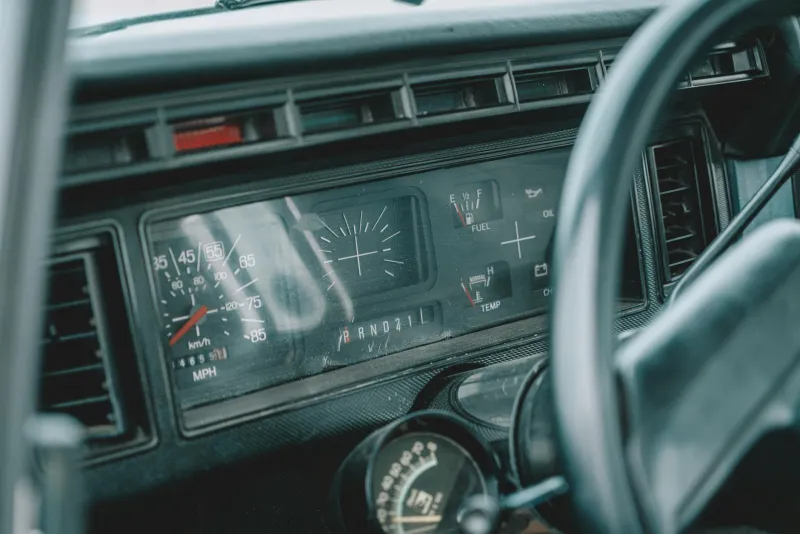
The Dashboard Detective Story
In 1985, Sarah Chen pulled her Honda Civic into a rest stop outside Bakersfield, California. The temperature gauge needle had been climbing steadily for the past twenty miles, creeping from its normal position just left of center toward the dreaded red zone. She knew exactly what this meant: find water, find shade, and find it fast. Every driver did.
Today, Sarah's daughter Emma drives a 2023 Toyota Camry and couldn't tell you where the temperature gauge is located. She doesn't need to. When her engine overheats—if it ever does—a bright red warning light will appear, accompanied by an urgent chime and possibly a message on her infotainment screen. By then, though, the damage is often already done.
This transformation reveals something fascinating about how we've evolved from active participants in our cars' mechanical lives to passive recipients of their digital warnings.
When Gauges Told Stories
For decades, the temperature gauge occupied prime real estate on American dashboards, typically positioned right next to the speedometer. It wasn't decorative—it was essential survival equipment. The gauge told a continuous story about your engine's health, with experienced drivers learning to read its moods like a medical chart.
A normal reading sat somewhere between cold and hot, usually marked by a series of hash marks or a colored zone. Smart drivers knew their car's particular personality: maybe it ran slightly warmer in summer traffic, or took longer to warm up on winter mornings. The gauge became a conversation partner, offering real-time feedback about driving conditions, mechanical health, and upcoming problems.
More importantly, it provided early warning. That subtle drift toward the hot side might indicate a failing thermostat, a small coolant leak, or simply the need to downshift on a long mountain grade. Drivers who paid attention could pull over before catastrophic overheating turned their engine into expensive scrap metal.
The Art of Automotive Intuition
Reading a temperature gauge required genuine skill. Unlike today's binary warning systems—everything's fine until suddenly it's not—analog gauges demanded interpretation. Was that needle position normal for stop-and-go traffic? Should you be concerned about that gradual climb during your mountain vacation?
Experienced drivers developed an almost supernatural awareness of their gauge cluster. They'd glance down during long drives, checking not just speed but oil pressure, voltage, and yes, temperature. This constant monitoring created an intimate mechanical relationship that's largely disappeared from modern driving.
Car enthusiasts still talk about "driving by the seat of your pants," but they really mean driving by the gauges. You felt connected to your machine's vital signs, aware of its mechanical needs and limitations. When something felt wrong, you had the instruments to investigate.
The Digital Disappearing Act
Modern cars haven't eliminated temperature monitoring—they've made it invisible. Sophisticated engine management systems constantly track coolant temperature, adjusting fan speeds, fuel mixture, and timing to maintain optimal operating conditions. When everything works correctly, drivers never need to think about engine temperature.
This represents remarkable engineering progress. Today's engines run more efficiently, overheat less frequently, and provide better warning systems when problems develop. The trade-off is situational awareness. Modern drivers have no idea if their engine is running at 195 degrees or 215 degrees, both perfectly normal but indicative of different operating conditions.
Many new cars still include temperature gauges, but they're often relegated to secondary displays or simplified into basic "cold-normal-hot" indicators. Some manufacturers have replaced them entirely with warning lights that illuminate only during emergencies.
What We Lost in Translation
The disappearance of meaningful temperature gauges reflects a broader shift in automotive philosophy. We've moved from cars that demanded driver participation to cars that prefer driver ignorance. Modern vehicles handle thousands of decisions automatically, from transmission shifting to brake pressure distribution.
This evolution brings undeniable benefits: improved reliability, reduced maintenance anxiety, and fewer roadside emergencies. But something intangible disappeared along the way—that sense of mechanical partnership between driver and machine.
Older drivers often describe a different relationship with their cars, one built on understanding and mutual respect rather than blind trust. They knew when their engine was working hard, when it needed help, and when trouble was brewing. That knowledge created better drivers who understood their vehicles' capabilities and limitations.
The New Normal
Today's automotive reality is undeniably safer and more reliable. Engine failures are rare, and when they occur, sophisticated warning systems provide clear instructions. Modern drivers can focus on navigation, entertainment, and traffic rather than monitoring mechanical vital signs.
Yet something feels lost in this transition. We've traded mechanical literacy for convenience, automotive intuition for algorithmic management. The temperature gauge's quiet disappearance symbolizes our evolving relationship with technology—from active partnership to passive dependence.
Next time you're in a car, take a moment to locate the temperature gauge. If you can find it, notice whether you ever actually look at it. Chances are, like most modern drivers, you've learned to trust that your car will tell you when something's wrong.
That trust usually proves justified. But somewhere between the analog past and digital present, we lost the ability to have a conversation with our machines—and maybe, just maybe, we lost something important about understanding the mechanical world that carries us through our daily lives.