When Every American Heard the Same Song at the Same Time
The $130 Gamble That Changed Everything
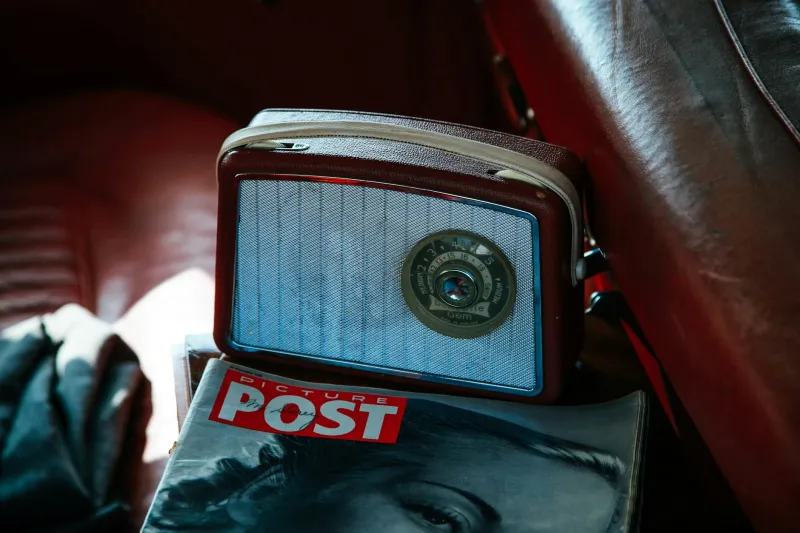
In 1930, if you wanted a radio in your Studebaker, you had to shell out $130 — roughly $2,000 in today's money. Car dealers thought you were crazy. Police worried you'd crash while fiddling with the dial. Newspapers ran editorials warning that "radio-equipped automobiles" would create "musical mayhem" on America's roads.
They were all spectacularly wrong about the danger, but they had no idea they were witnessing the birth of the most powerful cultural force in American history.
The Accidental Social Network
What happened next was something nobody planned for: millions of Americans started experiencing the exact same cultural moments simultaneously. When Elvis first crooned on the radio in 1954, truck drivers in Montana heard it at the same time as housewives in Georgia. When President Kennedy was shot, the news reached construction workers and bank executives within minutes of each other, all through their car radios during lunch breaks.
The car radio didn't just play music — it created a shared national consciousness that had never existed before. For the first time in human history, an entire continent of people could be moved by the same song, laugh at the same joke, or feel the same chill from breaking news, all while sitting in traffic.
Rush Hour as Prime Time
By the 1960s, radio programmers figured out something remarkable: the evening commute was the largest simultaneous audience in American history. More people listened to the radio between 5 and 7 PM than watched the most popular TV shows. DJs became the unofficial mayors of their cities, their voices more familiar to commuters than their own neighbors'.
This wasn't just background noise — it was appointment listening. "Drive time" radio shaped everything from which songs became hits to how politicians timed major announcements. The Beatles knew their American breakthrough depended on car radio play. Martin Luther King Jr. scheduled his most important speeches to catch the evening commute.
The Great Fragmentation Begins
The first crack in this shared experience came with FM radio in the 1970s. Suddenly, instead of three AM stations playing the same hits, cities had dozens of specialized channels. Classic rock, jazz, talk radio, country — Americans started self-sorting into audio tribes.
But even then, geography still mattered. If you lived in Chicago, you probably knew WLS. Angelenos had their KROQ. Regional radio personalities became local celebrities, and certain songs still belonged to certain cities at certain times.
The Cassette Tape Revolution
Then came the real game-changer: the cassette deck. For the first time since the car radio's invention, drivers could choose exactly what they wanted to hear. The mixtape culture of the 1980s was really the first personalized playlist revolution — it just happened to involve a lot more rewinding.
Suddenly, your commute could sound like whatever you wanted it to sound like. The shared soundtrack started to fracture, but slowly. Making a good mixtape took effort, and most people still flipped to the radio when their tape ended.
When Everything Changed at Once
The death blow to communal car radio came not from one technology, but from three hitting simultaneously in the early 2000s: satellite radio, CD players that could burn custom playlists, and eventually, smartphones with unlimited music libraries.
Satellite radio promised "hundreds of channels," which sounded amazing until you realized it meant no two people would ever listen to the same thing again. Spotify's algorithm-driven playlists completed the job: now your car doesn't just play different music than everyone else's — it plays different music than it played yesterday, customized to your personal listening patterns in ways even you don't understand.
What We Lost in the Translation
Today's car audio experience is objectively superior in every measurable way. Better sound quality, unlimited selection, no commercials, perfect personalization. But something intangible disappeared in the upgrade.
We lost the cultural moments when an entire generation heard "Stairway to Heaven" for the first time on the same Tuesday afternoon. We lost the shared experience of sitting in traffic, all tuned to the same emergency broadcast. We lost the DJ who knew exactly what your city needed to hear on a snowy Monday morning.
The Algorithm Knows You Better Than You Know Yourself
Modern car infotainment systems don't just play music — they predict what you want to hear based on your location, time of day, driving patterns, and listening history. It's remarkable technology that creates the perfect soundtrack to your individual life.
But it also means that if you and your neighbor left for work at exactly the same time, took the same route, and arrived at the same moment, you'd have heard completely different soundtracks to the same journey. The shared American experience has become a population of one.
The Phantom Limb of Shared Culture
Sometimes you can still feel it — that ghost of collective experience. When a classic rock song comes on at a red light and you notice the driver next to you drumming along to the same beat. When a breaking news alert somehow reaches everyone's phone at the exact same moment. These brief synchronized moments feel almost magical now, precisely because they're so rare.
The car radio taught us what it felt like to be part of something bigger than ourselves, even while sitting alone in traffic. We traded that feeling for perfect personalization, and most days, it feels like a fair deal.
But every once in a while, when you're stuck in gridlock and your algorithm serves up the exact perfect song for that exact perfect moment, you might wonder: who else needs to hear this right now? And the answer, increasingly, is nobody. You're the only one listening.