When Drivers Had to Think for Themselves: The Lost Art of Traffic Intuition
Pull out your phone right now and check your maps app. See that sea of red, yellow, and green lines? Those colors represent millions of data points, real-time GPS tracking, and algorithmic predictions that would have seemed like pure magic to drivers just twenty years ago. But here's what's wild: somehow, we used to navigate rush hour traffic without any of this information — and we were pretty damn good at it.
The Human Traffic Computer
Before Waze became our co-pilot, American drivers operated like walking traffic computers. They'd memorize the exact timing of every traffic light on their route home. They knew that the left lane on I-95 always backed up at 4:47 PM, but the right lane stayed clear until 5:15. They could spot a fender-bender three miles ahead just by watching how brake lights cascaded through traffic like dominoes.
This wasn't casual observation — it was survival. Without real-time traffic data, drivers developed an almost preternatural ability to read the road. They'd notice when cars started bunching up differently, when the usual flow felt off, when something was wrong long before they could see what it was.
"I could tell you which lane to be in at every mile marker between downtown and the suburbs," says Maria Rodriguez, a 52-year-old marketing manager from Phoenix who's been commuting the same route for twenty-five years. "I knew exactly when to switch lanes, which exits got clogged, even which traffic lights had longer cycles on Fridays."
Radio Waves and Prayer
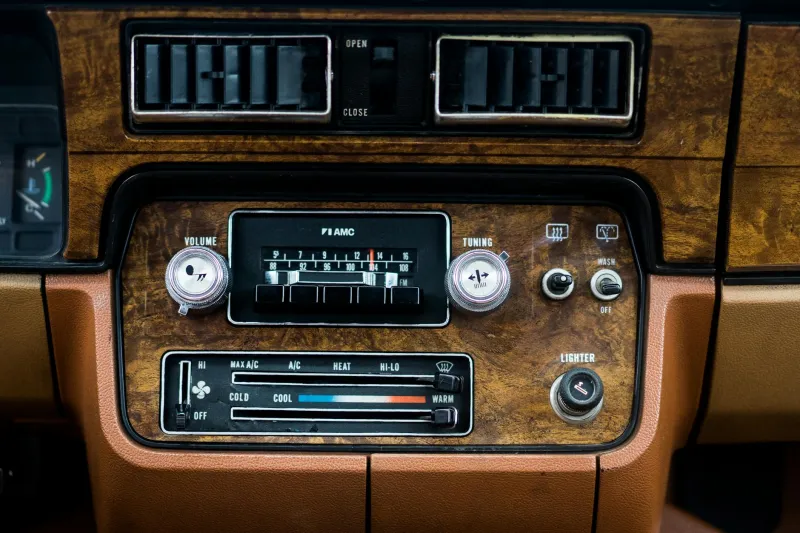
Remember traffic reports? Not the constant stream of updates we get now, but those precious few minutes every ten minutes when the radio traffic helicopter would crackle through the static with life-saving information. "Traffic on the eights" wasn't just a slogan — it was a lifeline.
Drivers would time their departures around these reports. Leave too early, and you'd miss crucial intel about that jackknifed truck on the interstate. Leave too late, and you'd be flying blind into gridlock with nothing but your own judgment to guide you.
The ritual was almost religious: coffee in one hand, radio dial in the other, ears trained to catch those magic words that could save or destroy your morning. "Avoid the inner loop," the traffic reporter would announce, and thousands of drivers would simultaneously execute Plan B — routes they'd mentally rehearsed but hoped never to use.
The Art of Reading Brake Lights
Without algorithmic predictions, drivers became students of human behavior. They learned to read traffic like a language. A sudden flash of brake lights a quarter-mile ahead meant trouble. The way cars were spacing themselves told a story about what was coming. The rhythm of acceleration and deceleration revealed whether this was normal congestion or something more serious.
Experienced commuters could distinguish between the brake light pattern of heavy traffic versus an actual accident. They knew the difference between the gradual slowdown of rush hour buildup and the abrupt stop of construction delays. This knowledge was earned through years of painful trial and error, traffic jams that cost them meetings, dates, and dinners.
Mental Maps and Muscle Memory
Before GPS, drivers carried detailed mental maps of their cities. Not just the main routes, but the secret shortcuts, the back roads, the residential streets that could save twenty minutes when everything else was jammed. These alternative routes were closely guarded knowledge, passed down like family recipes or discovered through desperate exploration.
Commuters knew their city's traffic personality. They understood that rainy weather would add fifteen minutes to any trip, that school zones changed everything during certain hours, that Friday afternoon traffic started earlier than Monday morning gridlock. This wasn't data — it was intuition built through thousands of hours behind the wheel.
The Smartphone Revolution
Then came the iPhone in 2007, and everything changed overnight. Suddenly, drivers had access to real-time traffic information that made their hard-earned knowledge seem quaint. Why memorize traffic patterns when an algorithm could route you around problems you didn't even know existed?
Google Maps and Waze didn't just provide information — they fundamentally changed how we think about driving. The cognitive load of navigation shifted from human intuition to artificial intelligence. We stopped learning our cities and started following blue dots.
What We Lost in Translation
Today's drivers navigate with unprecedented precision, but something has been lost in translation. The deep, intuitive knowledge of how traffic flows, how cities breathe, how roads respond to weather and time and human behavior — that's largely gone.
Modern drivers often can't navigate without their phones. They don't know alternative routes because they've never needed to learn them. They can't read traffic patterns because an app reads them instead. We've gained efficiency but lost a kind of street wisdom that took generations to develop.
The irony is stark: we have more traffic information than ever before, but we understand traffic less than we used to. We know exactly where we're going, but we've forgotten how to truly see the road.
The End of an Era
The drivers who navigated America's highways with nothing but their wits, a radio, and years of hard-won experience represent the end of an era. They were the last generation to develop that peculiar form of traffic intelligence — part science, part art, part survival instinct.
Their knowledge is disappearing with them, replaced by algorithms that are undeniably more accurate but somehow less human. We've solved the problem of traffic navigation so completely that we've forgotten it was ever really a problem at all.
Next time you're stuck in traffic, following that blue dot on your screen, take a moment to appreciate the drivers who came before — the ones who had to think their way through every mile, who earned their routes through trial and error, who navigated chaos with nothing but experience and intuition. They were traffic artists, and we barely remember they existed.