When Americans Drove Just to Drive: The Lost Art of the Purposeless Journey
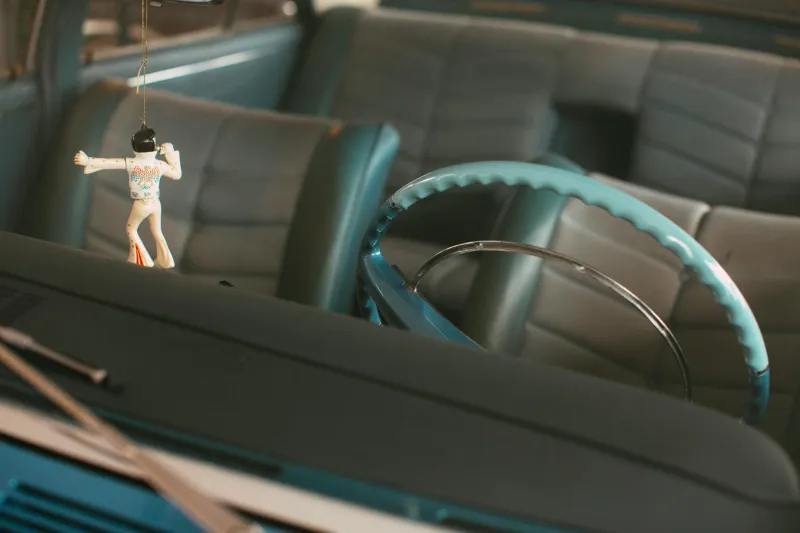
Picture this: It's Sunday afternoon in 1958. Your father adjusts his fedora, your mother smooths her dress, and you climb into the backseat of the family Buick. Where are you going? Nowhere in particular. And that's exactly the point.
The Sunday drive wasn't just transportation — it was meditation in motion, a weekly ritual that defined American leisure for the better part of a century. Today, the idea seems almost absurd. Who drives without a destination? Who burns gas just to burn gas? But for millions of American families, the Sunday drive was as essential as church, as comforting as mom's apple pie, and as American as baseball.
The Birth of Going Nowhere
The Sunday drive emerged from a perfect storm of post-war prosperity and automotive accessibility. After World War II, Americans found themselves with three things their parents could barely imagine: disposable income, leisure time, and reliable family cars. The 1950s brought us the suburban dream, and with it, the revolutionary idea that driving could be recreational rather than purely functional.
Before the war, most Americans saw cars as tools — expensive, temperamental tools that required constant maintenance and careful rationing of use. But the post-war boom changed everything. Suddenly, taking the car out "just because" wasn't wasteful — it was affluent. It was modern. It was the American way.
The ritual was beautifully simple. After Sunday dinner, families would load into their Chevrolet Bel Air or Ford Fairlane and set off on meandering routes through the countryside. There was no GPS because there was no destination. No schedule because there was no appointment. No rush because there was nowhere urgent to be.
The Golden Age of Aimless Wandering
By the 1960s, the Sunday drive had become woven into the fabric of American culture. Suburban developments were designed with scenic drives in mind. Rural communities built their economies around Sunday drivers who might stop for ice cream, antiques, or just to stretch their legs. Gas stations became social hubs where families would pause, not because they needed fuel, but because stopping was part of the experience.
The cars themselves were designed for this kind of leisure driving. Wide bench seats encouraged conversation. Large windows provided panoramic views. Smooth suspensions prioritized comfort over performance. These weren't vehicles built for commuting or efficiency — they were living rooms on wheels, designed for families to spend hours together in comfortable motion.
The Sunday drive created its own geography. Scenic routes became local treasures, passed down through generations like family recipes. Everyone knew the road that wound past the covered bridge, the route that offered the best view of the valley, the back way to the lake where you might spot deer at dusk. These weren't highways or interstates — they were the capillary roads that connected small towns and countryside, the arteries that kept rural America alive.
The Slow Death of Wandering
So what killed the Sunday drive? The answer isn't simple, but it starts with time. Somewhere between the 1970s and today, Americans lost the luxury of aimless hours. Two-career households became the norm, children's schedules became packed with organized activities, and leisure time became something to be optimized rather than savored.
The cars changed too. As fuel efficiency became a priority, the spacious, comfortable cruisers of the 1950s and 60s gave way to smaller, more practical vehicles. Air conditioning made windows optional, GPS made getting lost impossible, and smartphones made boredom a choice rather than a given. Why stare out the window when you could check Instagram?
Urban sprawl played its part as well. The scenic country roads that once defined Sunday drives were either swallowed by development or became too congested to be peaceful. The small towns that welcomed Sunday drivers with ice cream stands and antique shops were replaced by strip malls and chain restaurants that offered nothing unique worth discovering.
What We Lost When We Stopped Going Nowhere
The death of the Sunday drive represents more than just a change in leisure habits — it marks a fundamental shift in how Americans relate to time, space, and each other. The Sunday drive was unproductive by design, and in our productivity-obsessed culture, that's become almost sinful.
Those aimless hours in the car were where families talked without distractions, where children learned to find entertainment in their own minds, where couples rediscovered conversation without the pressure of eye contact. The Sunday drive was democracy in motion — everyone in the car had equal say in which road to take next, which ice cream stand looked most promising, whether to turn around or keep going.
More importantly, the Sunday drive taught Americans to see their own country as worth exploring. Before cheap air travel made exotic destinations accessible, the Sunday drive was how middle-class families discovered that adventure didn't require a passport — it just required curiosity and a full tank of gas.
The Road Not Taken Anymore
Today's driving culture is ruthlessly efficient. We drive to get somewhere, ideally as quickly as possible. Our GPS units calculate the fastest route, our smartphones warn us about traffic delays, and our cars themselves seem designed to minimize the experience of actually driving. The journey has become nothing more than the inconvenient gap between departure and arrival.
Yet something essential was lost when we stopped driving just to drive. In our rush to get everywhere faster, we forgot the simple pleasure of being nowhere in particular, together, watching America roll by through the windshield at 35 miles per hour on a lazy Sunday afternoon.
The Sunday drive is dead, but its ghost still haunts every traffic jam and every GPS recalculation. It whispers a question our efficiency-obsessed culture has forgotten how to answer: What if the point isn't to arrive, but simply to go?