Picture this: It's 1965, and a college student from Ohio stands on the side of Route 66 with nothing but a cardboard sign reading "California" and absolute confidence that someone will stop. Within an hour, a traveling salesman pulls over, offers coffee from his thermos, and they spend the next 200 miles discussing baseball and the war in Vietnam. Both men part ways thinking well of humanity.
Fast-forward to today, and that same scenario would send most Americans reaching for their phones to call 911. What happened?
The Golden Age of Thumbing It
From the 1930s through the 1970s, hitchhiking wasn't just accepted in America — it was woven into the cultural fabric. During World War II, government propaganda actually encouraged civilians to pick up uniformed servicemen. "Sharing rides saves rubber for victory!" proclaimed wartime posters, making hitchhiking a patriotic act.
The practice reached its zenith in the 1960s and early '70s. College students routinely hitchhiked across the country during summer breaks, treating it as both transportation and adventure. Jack Kerouac's "On the Road" romanticized the thumb-powered journey, and countless Americans saw hitchhiking as the ultimate expression of freedom and trust in their fellow citizens.
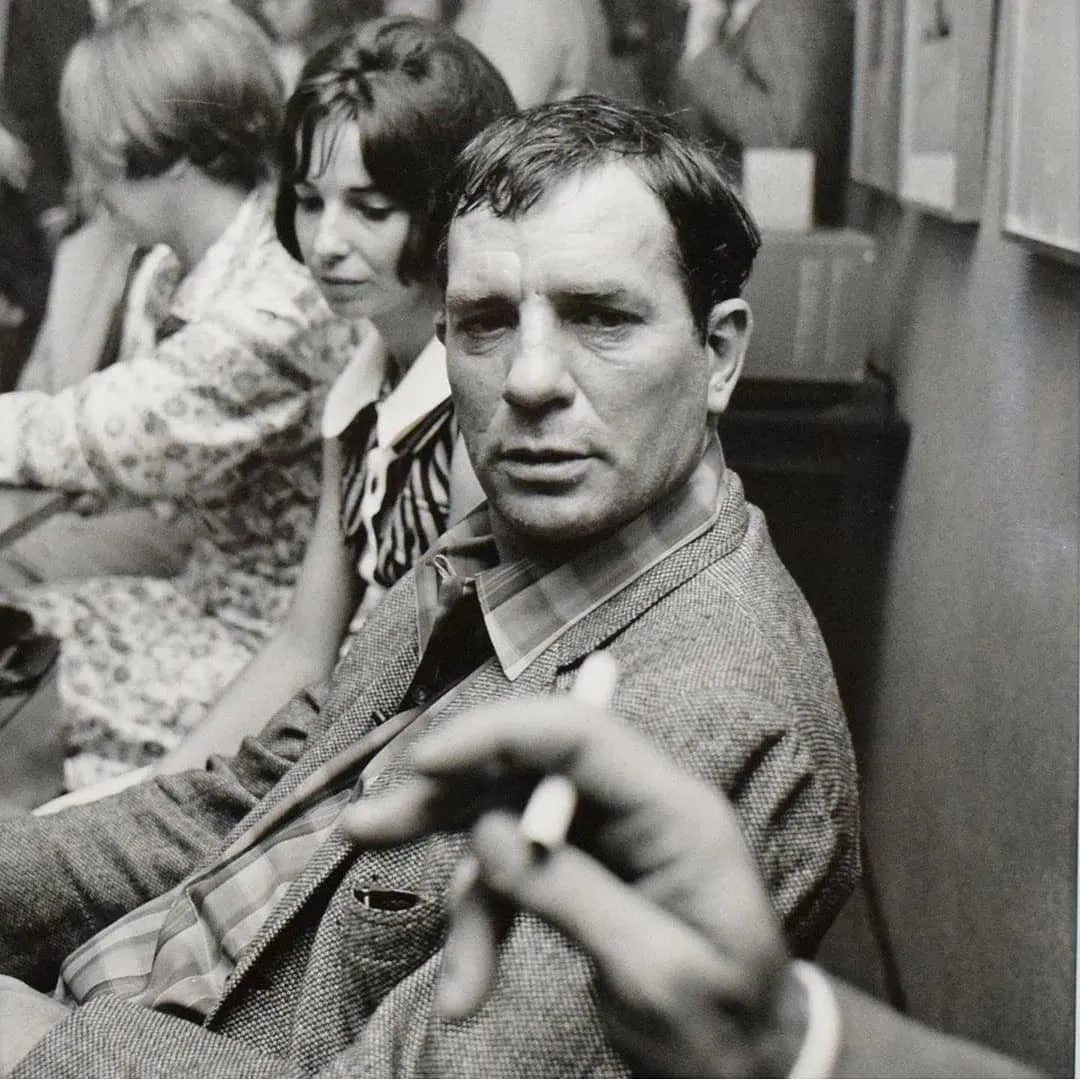 Photo: Jack Kerouac, via i.pinimg.com
Back then, the unwritten rules were simple: drivers stopped because helping strangers was neighborly, and hitchhikers were grateful, respectful guests. Cars regularly pulled over for anyone who looked like they needed a ride — young or old, male or female. The practice was so mainstream that many states actually designated official hitchhiking zones near highway on-ramps.
When the Music Stopped
The transformation didn't happen overnight, but by the 1980s, the cultural tide had decisively turned. Several forces converged to kill America's hitchhiking tradition.
First came the true crime explosion. High-profile cases like those involving serial killers who either picked up hitchhikers or posed as them dominated headlines throughout the 1970s and '80s. Television shows, movies, and news coverage created a feedback loop where every roadside interaction became potentially sinister. The stranger who might have been a friendly traveling companion in 1965 was now a potential threat in 1985.
Suburban sprawl played its part too. As Americans moved to car-dependent communities, the very concept of needing a ride became foreign. Why would anyone be walking along a road unless something was seriously wrong? The normalization of car ownership made hitchhikers seem increasingly out of place — and therefore suspicious.
The Legal Crackdown
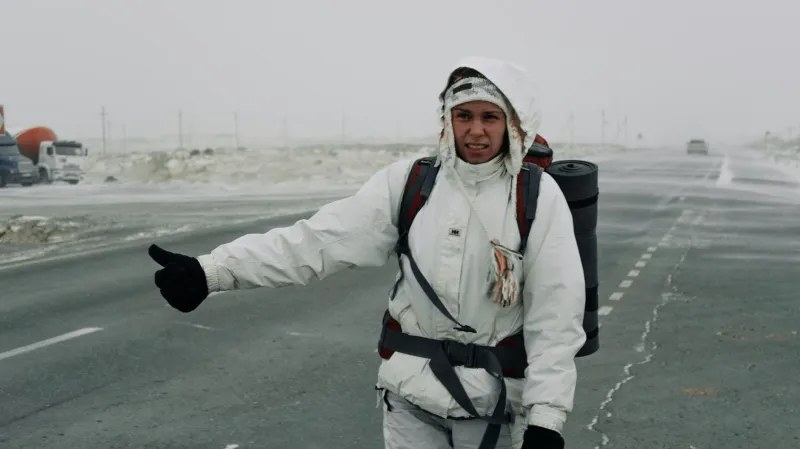
States began outlawing hitchhiking throughout the 1980s and '90s, citing safety concerns and traffic flow issues. Today, hitchhiking is illegal in most states, though enforcement varies wildly. What was once a constitutionally protected form of free speech and movement became a ticketable offense.
Insurance companies got involved too, warning that picking up strangers could void coverage if something went wrong. The legal system that once protected Good Samaritans began creating liability concerns for anyone willing to help.
What We Lost Along the Way
The death of hitchhiking represents something larger than just a change in transportation habits. It marks a fundamental shift in how Americans relate to strangers and assess risk.
In 1970, the default assumption was that most people were basically decent. Stopping for a hitchhiker was an act of community — you helped because someone needed help, and because you might need help yourself someday. The roads were seen as a shared space where mutual aid was normal.
Today, our default assumption has flipped. Strangers are potential threats until proven otherwise. The person on the roadside isn't someone who needs help — they're someone to avoid. We've traded spontaneous human connection for calculated safety, and in doing so, we've lost something essentially American about trusting in the basic goodness of our fellow travelers.
The Modern Equivalent
Interestingly, Americans haven't lost their willingness to ride with strangers — we've just outsourced the trust-building to algorithms. Uber and Lyft have essentially recreated hitchhiking, complete with strangers picking up other strangers for money. The difference is that an app mediates the interaction, providing ratings, GPS tracking, and digital accountability that roadside encounters never had.
In many ways, ride-sharing proves that the fundamental human desire to share transportation never died. We just needed technology to make us feel safe about it again.
The Road Less Traveled
Today's America moves faster than ever, but we've lost the random human connections that once made travel an adventure in meeting people. The college student who once hitchhiked from Ohio to California learned about America not just by seeing it, but by talking to the people who stopped to help.
That education — in trust, in human nature, in the basic decency of strangers — is largely gone now. We're safer, perhaps, but we're also more isolated, more suspicious, and less likely to believe that the person on the side of the road might just be someone like us who needs a hand.
The death of hitchhiking didn't just change how we travel. It changed how we see each other. And in a country built on the idea that strangers can become neighbors, that might be the most significant loss of all.