The Universal Question That Bound Us Together
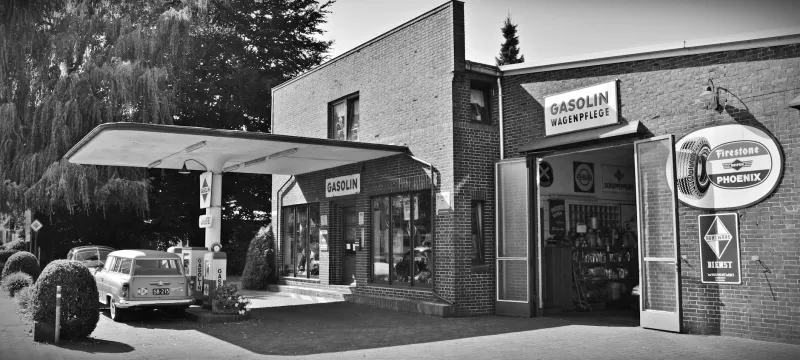
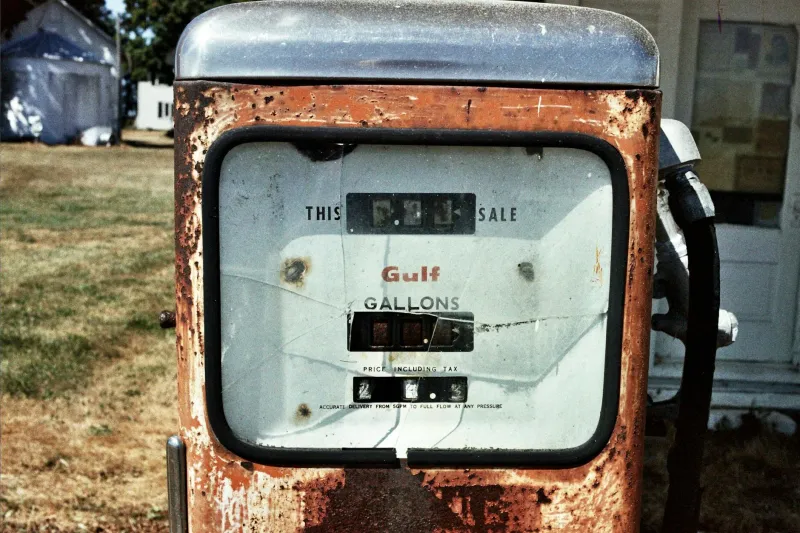
There was a time when every American driver knew the drill. You'd slow down at a gas station, roll down your window, and ask the question that connected strangers across the country: "Excuse me, how do I get to...?"
It was more than navigation. It was a social contract written in shared vulnerability — the admission that you were lost, and the trust that someone would help you find your way. For decades, this simple exchange was as common as stopping for red lights, and just as fundamental to how America moved.
Today, that ritual has vanished so completely that young drivers have never experienced it. GPS eliminated our need to ask, and with it, we lost something harder to quantify: the brief intimacy of strangers helping strangers navigate the world.
When Getting Lost Was a Community Event
Before smartphones, being lost wasn't a private frustration — it was a public problem that demanded public solutions. Gas station attendants became informal traffic controllers, dispensing directions along with fuel. Store clerks doubled as local geography experts. Even random pedestrians were fair game for the desperate driver circling the same block for the third time.
The interaction followed unspoken rules. The lost driver approached with appropriate humility. The helper responded with patient detail, often drawing invisible maps in the air with their hands. "You're going to go down here about two miles until you see the big red barn, then turn left at the church with the tall steeple."
These directions were wonderfully human — full of local landmarks, personal observations, and the kind of spatial reasoning that made sense to people who knew the area intimately. They were also wildly inconsistent, occasionally wrong, and sometimes hilariously unhelpful. But they worked often enough to keep the system alive.
The Economics of Being Helpful
Businesses built entire models around this need for human guidance. Gas stations positioned themselves as navigation hubs, knowing that lost drivers were also potential customers. Roadside diners became unofficial information centers where waitresses dispensed directions along with coffee refills.
The relationship was symbiotic. Travelers needed help, and local businesses needed customers. A simple request for directions often led to purchases — gas, food, or just the goodwill that brought people back. Small towns understood that being helpful to lost strangers was good for business.
Some establishments took this role seriously, training staff to give clear, accurate directions and keeping local maps behind the counter. Others became legendary for their helpfulness, earning reputations that spread through word of mouth and travel guides.
The Intimacy of Shared Geography
Asking for directions created moments of unexpected connection between people who had no other reason to interact. In those brief exchanges, strangers shared their knowledge of place, their understanding of how the world fit together.
These conversations revealed personality in ways that surprised both parties. Some people gave directions like military briefings — precise, efficient, no-nonsense. Others turned them into stories, complete with historical context and personal anecdotes. "You'll pass the house where my cousin used to live — it's got the blue shutters — and then you'll know you're getting close."
For travelers, these interactions provided glimpses into local culture and character. The way people gave directions reflected how they thought about their community, what landmarks mattered to them, and how they related to strangers in need.
When Wrong Turns Built Character
Getting lost wasn't just inconvenient — it was educational. Drivers developed spatial awareness, learned to read landscapes, and built mental maps of the places they traveled. Wrong turns led to unexpected discoveries: scenic routes, interesting towns, roadside attractions that weren't in any guidebook.
The process of finding your way back from being lost taught problem-solving skills that extended beyond navigation. It required patience, resourcefulness, and the ability to admit when you needed help — qualities that served drivers well in other aspects of life.
Families navigating together developed their own systems and hierarchies. Someone became the designated map reader. Arguments erupted over missed turns and misread directions. But these challenges also created shared experiences and stories that lasted decades.
The Death of a Social Ritual
GPS didn't just change how we navigate — it eliminated our need to interact with other people in the process. The shift happened remarkably quickly. By the mid-2000s, asking strangers for directions had become so rare that it seemed almost anachronistic, like asking to use someone's rotary phone.
The efficiency gains were undeniable. GPS provided turn-by-turn instructions, real-time traffic updates, and the ability to reroute instantly. It eliminated the anxiety of being lost and the frustration of following confusing directions to nowhere.
But something else disappeared: those thousands of tiny human connections that happened at gas pumps, store counters, and street corners across America. We gained precision and lost serendipity. We gained control and lost the gentle vulnerability of admitting we needed help.
What We Gave Up When We Stopped Getting Lost
Today's drivers navigate with surgical precision, following blue dots across digital maps that update in real time. They rarely speak to strangers about where they're going or how to get there. The social infrastructure that once supported lost travelers has largely dissolved.
Gas stations no longer train attendants to give directions because no one asks. Local businesses have lost a natural way to connect with potential customers. And Americans have lost a simple, universal experience that once connected them across geographic and social boundaries.
We're more efficient now, but also more isolated. We know exactly where we're going, but we've stopped asking others to help us get there. In gaining perfect navigation, we lost something perfectly human — the recognition that sometimes, we all need a little help finding our way.