Before Traffic Lights Existed, American Streets Were Basically a Contact Sport
Before Traffic Lights Existed, American Streets Were Basically a Contact Sport
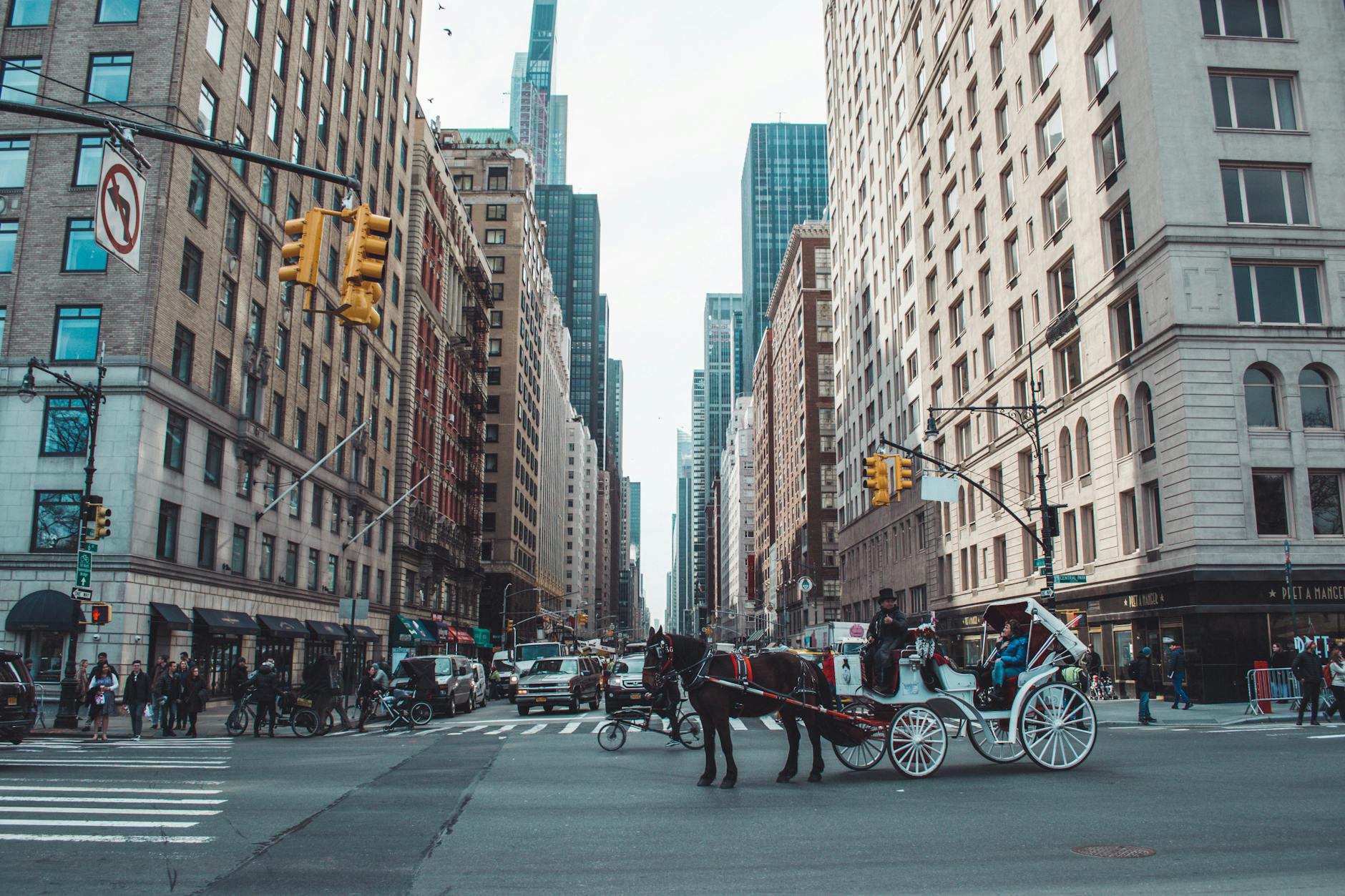
Picture a busy intersection in downtown Chicago around 1910. There are no painted lane lines on the pavement. No stop signs at the corners. No traffic signal hanging overhead. What there is: horse-drawn delivery wagons competing for space with electric streetcars running on fixed tracks, pedestrians crossing wherever they feel like it, cyclists weaving between everything, and a growing number of automobiles whose drivers have almost no training and even less legal obligation to anyone else on the road.
This wasn't a scene from a city that had fallen into disorder. This was normal. This was Tuesday.
The road infrastructure Americans navigate today — the signals, signs, markings, and rules that feel so mundane they barely register — didn't exist until someone decided to invent it. And the reason they invented it was because the alternative was killing people at a rate that eventually became impossible to ignore.
The Street Before the Car
To understand how chaotic early 20th century streets were, it helps to understand what they were designed for — which was essentially nothing in particular. American city streets in the 1800s evolved organically, shaped more by property lines and foot traffic than by any coherent planning. They were shared spaces in the truest sense: vendors, pedestrians, children playing, horses pulling everything from milk wagons to fire equipment, and the occasional bicycle.
Horse-drawn traffic had its own informal logic built up over generations. Drivers understood roughly how to navigate around each other, how to signal turns, how to manage a busy intersection through eye contact and yielding customs that were understood if never codified. It wasn't safe by modern standards, but it had a rhythm.
Electric streetcars added a new layer of complexity starting in the 1880s. They ran on fixed rails, couldn't steer around obstacles, and had stopping distances that surprised anyone who hadn't encountered one before. Cities grew their streetcar networks rapidly, and the tracks became permanent features that every other road user had to work around.
Then automobiles arrived, and the whole informal system broke down almost immediately.
The Car as Chaos Agent
Early automobiles were faster than anything else on the street, less predictable than streetcars, and operated by people who had no formal training and faced almost no legal accountability. There were no standardized rules of the road in the early 1900s — different cities had different ordinances, many of which were rarely enforced, and rural roads had essentially nothing.
The results were catastrophic. Traffic fatalities in American cities spiked sharply as car ownership grew. By the early 1920s, automobile deaths had become a genuine public health crisis. In 1922, roughly 15,000 Americans were killed in traffic accidents. Adjusted for the far smaller number of vehicles on the road at the time, that rate was staggering — far worse per registered vehicle than today's numbers, despite the complete absence of highway speeds.
Newspapers ran illustrations of cars as menacing invaders. Community groups organized protests. The word "joyrider" entered the American vocabulary as a term of contempt for reckless drivers. There was serious public debate about whether private automobiles should be permitted in city centers at all.
Inventing Order From Scratch
The response was one of the most ambitious infrastructure projects in American history, even though it's rarely described that way. Over roughly four decades, the country essentially invented the modern road system — not just the physical roads, but the entire framework of rules, signs, signals, and markings that make those roads navigable.
The first electric traffic signal appeared in Cleveland in 1914 — a simple red and green light operated by a police officer in a booth nearby. Detroit and New York followed. By the early 1920s, manually operated signals were common in major cities, and automatic timed signals began appearing shortly after. The first nationally recognized stop sign was standardized in 1954, though stop signs in various forms had been appearing since the 1910s.
Painted lane markings came from an unexpected place: a Michigan road engineer named Edward Hines, who reportedly got the idea watching a leaky milk wagon leave a white trail down the center of a road in 1911. Center lines began appearing on Michigan roads shortly after and spread nationally over the following decades.
Crosswalks, yield signs, speed limit signs, highway numbering systems, reflective markers — each one was a deliberate invention, usually created in response to a specific problem that was injuring or killing people. The Manual on Uniform Traffic Control Devices, first published in 1935, attempted to standardize all of it nationally, replacing the chaotic local variations with a system any American driver could theoretically understand anywhere in the country.
The Infrastructure You've Stopped Seeing
The mundane becomes invisible. Most American drivers navigate stop signs, lane markings, and traffic signals without consciously registering them — they've become part of the background of driving, as automatic as breathing. That invisibility is actually a measure of how well the system works. When infrastructure is functioning properly, you don't notice it.
But those white lines painted on asphalt, those red octagons at intersections, those overhead signals cycling through their colors — none of them are natural features of the road. They were each, at some point, a proposed solution to a problem that was actively killing people. Someone had to argue for them, fund them, standardize them, and gradually get an entire country of drivers to follow them.
The streets of 1910 Chicago weren't chaotic because the people using them were careless or stupid. They were chaotic because the tools for organizing them hadn't been invented yet.
The next time you stop at a red light and feel mildly impatient, consider that the alternative — the world before someone figured out that intersection — was considerably worse.