The Death of the Dashboard Debate: When GPS Murdered America's Greatest Relationship Test
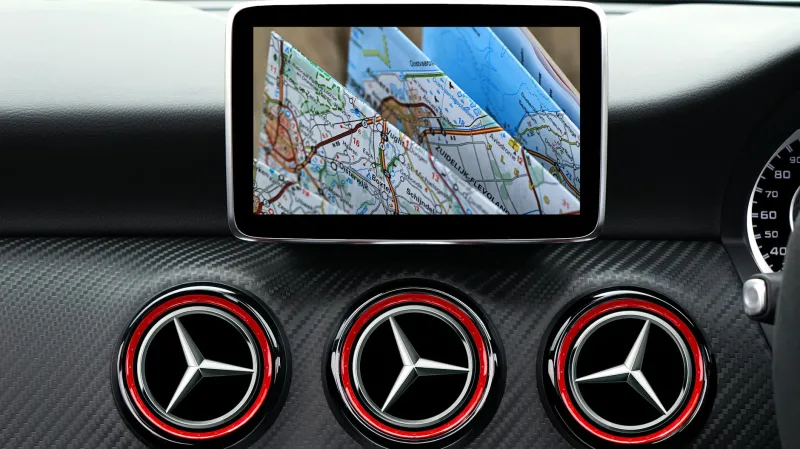
The Sacred Ritual of the Road Trip Navigator
Every American family had one: the designated navigator. Armed with a spiral-bound road atlas or an accordion-folded state map that never quite refolded correctly, they occupied the passenger seat like mission control. Their job was part air traffic controller, part relationship counselor, and part fortune teller — predicting traffic, deciphering cryptic highway signs, and somehow maintaining domestic peace while everyone hurtled down the interstate at 70 mph.
This wasn't just about getting from Point A to Point B. The navigator role was a rite of passage, a test of trust, and occasionally, grounds for divorce. "Take Exit 47B toward Harrisburg," they'd announce with the gravity of a NASA countdown. Miss that exit? Well, that was a 20-minute detour and a conversation that would be referenced for years.
Today's drivers have no idea what they missed. Or maybe, what they were spared from.
When Getting Lost Was a Team Sport
Before GPS became standard equipment around 2010, navigation was intensely collaborative. The driver focused on not dying; the navigator handled everything else. They'd trace routes with their finger, calculate mileage, and make real-time decisions about alternate paths. "Traffic looks heavy on I-95," they might say, studying the map. "Want to try Route 1 through the small towns?"
These weren't just logistical decisions — they were negotiations. The navigator had to sell their route choice, defend it when things went wrong, and take credit when they shaved 30 minutes off the trip. They developed intimate knowledge of highway systems, learned to read traffic patterns, and could estimate drive times with surprising accuracy.
Most importantly, they stayed engaged with the journey itself. While the driver watched the road, the navigator watched the world — noting landmarks, reading billboards, spotting interesting detours. They were the trip's documentarian and decision-maker rolled into one.
The Brutal Honesty of Paper Maps
Paper maps didn't lie or sugarcoat reality. If you were in the middle of nowhere, the map showed you exactly how nowhere you were. If the next gas station was 47 miles away, you saw that empty space stretching across the page. This forced a kind of geographic awareness that's almost extinct today.
Navigators learned to think in terms of cardinal directions, major highways, and geographic features. They'd say things like, "We're heading northwest toward the mountains," or "Once we cross the Mississippi, we'll pick up I-40 west." They understood their position in the larger landscape, not just their next turn.
Compare that to today's GPS instructions: "In 400 feet, turn right." Right onto what? Toward what? Most drivers couldn't tell you which direction they're heading or what major road they're on. They've outsourced spatial awareness to a device that treats navigation like a video game — just follow the blue line.
When Wrong Turns Were Adventures
Getting lost with a human navigator was frustrating but oddly democratic. You'd pull over, spread the map across the hood, and figure it out together. Sometimes you'd discover a scenic route nobody planned. Sometimes you'd end up in a small town with a legendary diner. Sometimes you'd just drive in circles for an hour, but you'd do it together.
These mistakes created stories. "Remember when Dad missed the exit to Yellowstone and we ended up in that tiny Montana town?" became family lore. Wrong turns weren't failures — they were unplanned adventures that often became the most memorable parts of the trip.
GPS wrong turns, by contrast, feel like betrayals. The device promised perfection and failed. There's no shared responsibility, no collaborative problem-solving, just irritation at a malfunctioning gadget.
The Lost Art of Local Knowledge
Experienced navigators developed reputations. Uncle Bob knew every back road between Chicago and Milwaukee. Mom could get you through downtown Detroit without touching the freeway. These people were walking databases of regional geography, accumulated through years of actual navigation experience.
They'd share this knowledge like trade secrets: "If you're going to the beach, take Route 9 instead of I-95 — it's prettier and usually faster." "Never trust the signs for 'Downtown' in Philadelphia — they'll dump you in traffic hell." This wasn't just information; it was hard-won wisdom passed down through generations of road warriors.
Today, that knowledge has been democratized and digitized. GPS systems know every shortcut, every traffic pattern, every road closure in real-time. It's incredibly efficient and utterly impersonal. We've gained convenience but lost the human expertise that made navigation feel like a craft.
The Silence in the Passenger Seat
Perhaps the strangest change is how quiet car trips have become. Without navigation duties, passengers often zone out — scrolling phones, sleeping, or staring blankly out the window. The constant dialogue between driver and navigator has been replaced by occasional GPS announcements and whatever's on the radio.
That old partnership required continuous engagement. "How many miles to the next exit?" "Are we still on the right road?" "What's that big city up ahead?" The conversation kept both people connected to the journey and to each other.
What We Gained (And What We Gave Up)
GPS navigation is undeniably better at its core function. It's more accurate, more current, and more forgiving than any human navigator ever was. It's eliminated the stress of getting lost, the arguments over missed turns, and the genuine anxiety of being somewhere unfamiliar without clear directions home.
But efficiency isn't everything. We've traded collaborative problem-solving for passive consumption, spatial awareness for turn-by-turn dependence, and shared adventure for individual isolation. The co-pilot role didn't just disappear — it was never replaced by anything equally engaging.
Every technological advance involves trade-offs. GPS gave us convenience and accuracy, but it also gave us a generation of drivers who couldn't navigate their way out of a paper bag if the satellites went dark. Whether that's progress or just change depends on what you think road trips were really about in the first place.