The $130 Question That Divided America
In 1930, Paul and Joseph Galvin installed the first commercially successful car radio in a Studebaker and called it the "Motorola" — literally "motor" plus "Victrola." The price tag? $130, roughly equivalent to $2,000 today. That was more than many Americans earned in a month, for a device that let you hear scratchy AM broadcasts while driving.
Early adopters were either wealthy enthusiasts or taxi drivers who saw commercial value in staying connected. Everyone else thought they were crazy. Why would anyone pay a fortune to bring radio into a car when radios at home were perfectly fine?
The Safety Panic That Almost Killed Car Audio
State governments immediately panicked. Massachusetts tried to ban car radios outright, arguing they distracted drivers dangerously. Connecticut and Pennsylvania considered similar legislation. The reasoning seemed sound: driving already required full attention, and adding audio entertainment was recklessly irresponsible.
Newspaper editorials warned that car radios would cause accidents, traffic jams, and moral decay. "The automobile radio is a menace to life and limb," declared one 1934 editorial. "No driver can safely operate a vehicle while his attention is divided between the road and a radio program."
The automotive industry itself was split. Some manufacturers refused to offer radios, considering them gimmicky distractions. Others saw opportunity in the controversy, marketing car radios as symbols of modern sophistication and technological progress.
The Technology That Barely Worked
Early car radios were mechanical nightmares. They required separate antennas, multiple batteries, and constant adjustment. Reception faded in and out based on geography, weather, and the car's electrical system. Static was constant. Clear reception was miraculous.
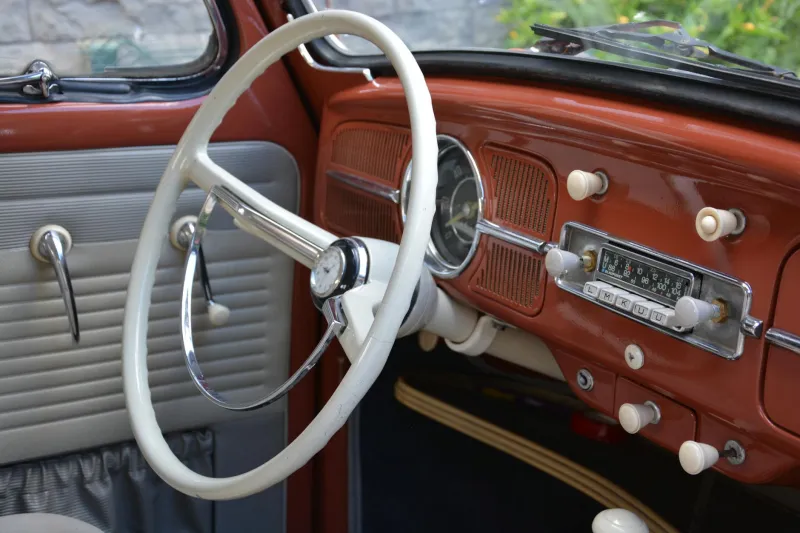
Installation required cutting holes in dashboards and running wires through the car's frame. Most mechanics refused the work, leaving owners to find specialized radio technicians. The entire process could take days and cost almost as much as the radio itself.
Yet despite these limitations, car radios began spreading through American culture like a slow-burning fuse.
The Medium That Found Its Message
By 1940, car radios had become affordable enough for middle-class buyers, and something unexpected happened: they began reshaping American media. Radio programmers realized they had a captive audience of commuters and road-trippers, leading to format innovations that still define broadcasting today.
Traffic reports were invented specifically for car radio listeners. Weather updates became more frequent and location-specific. News broadcasts shortened and accelerated to match the attention spans of drivers. The "drive-time" format emerged, built around the assumption that listeners were behind the wheel during morning and evening commutes.
Music programming changed too. Radio stations discovered that drivers preferred familiar songs over experimental content, leading to the rise of "Top 40" formatting. The car radio created the soundtrack of American mobility.
The Cultural Transmission Device
What nobody anticipated was how car radios would function as cultural distribution networks. Before car audio, music consumption was largely local and fragmented. Regional preferences stayed regional. Musical trends spread slowly, if at all.
Car radios changed that overnight. A song playing in Detroit could be heard simultaneously in Denver, Dallas, and Des Moines by travelers tuning into the same clear-channel AM stations. Musical tastes began nationalizing. Regional dialects and accents started homogenizing as people heard the same broadcasters across vast distances.
The car radio also democratized music discovery. Teenagers driving their parents' cars heard songs their families would never have purchased as records. Musical rebellion became portable, private, and personal in ways that home radios, controlled by parents, never allowed.
The Political Revolution Nobody Saw Coming
Politicians initially ignored car radios, but by the 1950s, they realized these dashboard devices were rewiring American democracy. Commuters became a captive audience for political messaging. Campaign strategies shifted to accommodate drive-time listeners. Political advertising budgets moved from newspapers to radio.
Presidential candidates began crafting messages specifically for car radio audiences. The intimate, conversational tone that worked in living rooms also worked in automobiles, creating a sense of personal connection between politicians and voters stuck in traffic.
Car radios also accelerated news cycles. Breaking news could reach Americans wherever they were driving, making the public more immediately aware of national events. The Kennedy assassination, for instance, reached millions of Americans through their car radios before they arrived home to television coverage.
The Social Fabric in Dashboard Form
By the 1960s, car radios had become social infrastructure. Families planning road trips consulted radio guides to find stations along their routes. Teenagers identified with specific radio personalities and music formats. Adults developed loyalty to particular news programs and talk show hosts.
The shared experience of hearing the same songs, commercials, and broadcasts while driving created a subtle but powerful form of cultural unity. Americans in different cities, different economic circumstances, and different social situations were nevertheless hearing identical content during their daily commutes.
The Foundation That Built Everything Else
Looking back, the car radio was the prototype for every in-vehicle entertainment system that followed. It established the expectation that cars should provide audio content, not just transportation. It proved that drivers could safely consume media while operating vehicles, despite early safety concerns.
Without the car radio's success, there would have been no 8-track players, no cassette decks, no CD players, no satellite radio, no Bluetooth connectivity, no smartphone integration. The dashboard revolution that began with Paul Galvin's $130 Motorola led directly to today's infotainment systems.
The Legacy That Drives Us Still
Today's drivers take in-car audio so completely for granted that silence feels abnormal. We've inherited a century-long assumption that driving and listening go together naturally, but that assumption was once radical, expensive, and controversial.
The next time you tap your smartphone to stream a podcast through your car's speakers, remember: you're participating in a cultural revolution that began when Americans paid a month's salary to hear scratchy AM radio through a dashboard speaker. That revolution changed not just how we drive, but how we consume culture, receive news, and experience the American road.
The car radio didn't just give us something to listen to while driving. It gave us the modern relationship between Americans and their automobiles — intimate, personal, and always accompanied by a soundtrack.