Your Family Sedan Would Have Embarrassed a 1970s Muscle Car — And That's a Weird Thing to Sit With
Your Family Sedan Would Have Embarrassed a 1970s Muscle Car — And That's a Weird Thing to Sit With
In 1970, if you wanted to go fast, you bought American iron. A big V8, a long hood, and something that announced itself before you could see it. The muscle car era was a genuine cultural moment — these weren't just vehicles, they were statements. And by the standards of the time, they were extraordinarily quick.
So it's a little disorienting to do the math and realize that a 2024 Toyota Camry, the automotive equivalent of a sensible Tuesday, can out-accelerate some of the most celebrated performance cars that era ever produced.
This isn't a knock on the classics. It's a story about how relentlessly engineering moves forward, and how speed — once rare and expensive — has become almost unremarkably ordinary.
What Fast Actually Looked Like in 1970
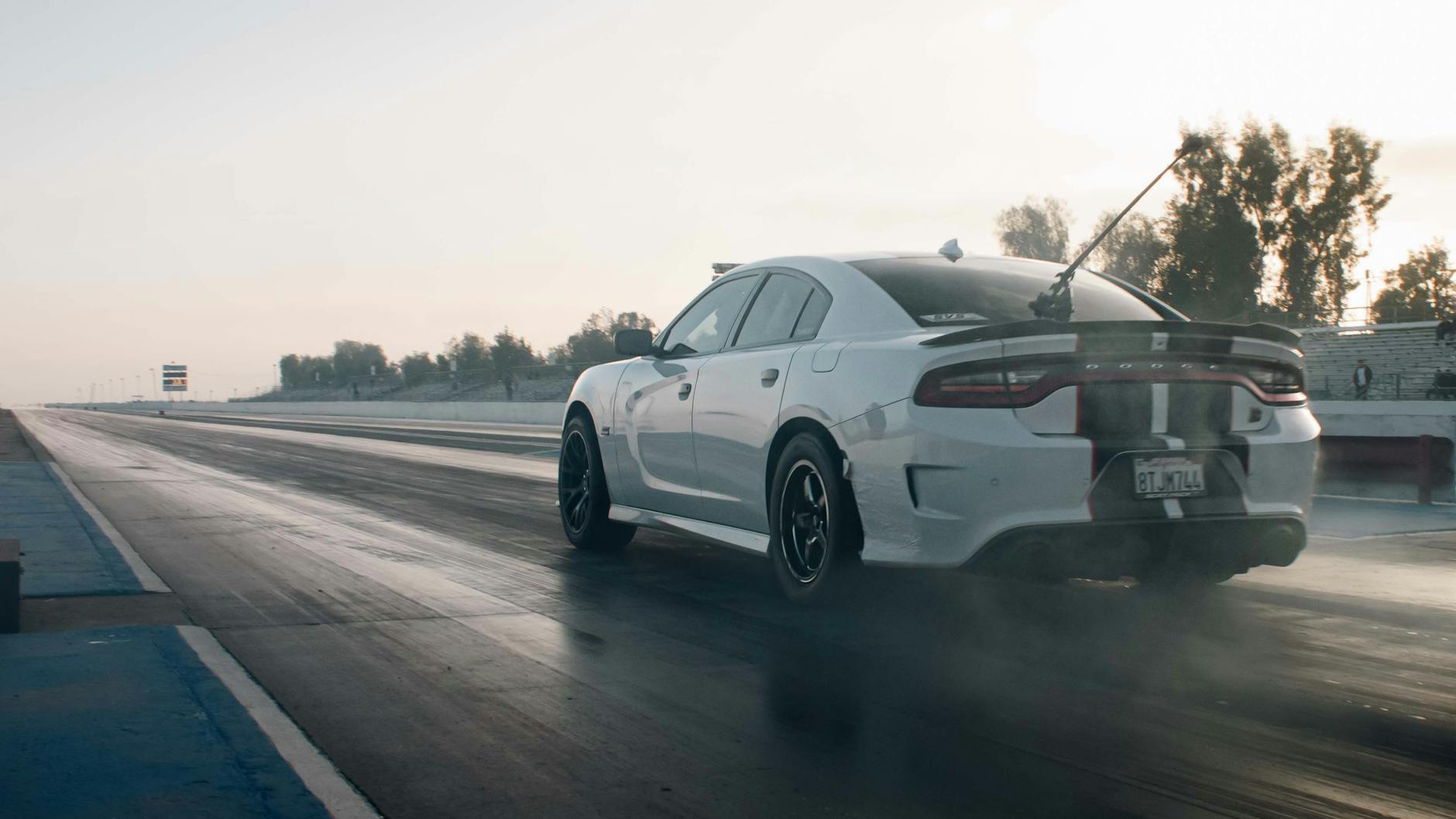
Let's use real numbers. The 1970 Dodge Charger R/T with the 440 cubic inch Magnum engine — one of the most iconic muscle cars ever built — ran 0 to 60 mph in approximately 6.0 to 6.5 seconds in period testing. The Plymouth Road Runner with the 426 Hemi, arguably the most celebrated performance engine of the era, clocked similar times. The Ford Mustang Boss 302 came in around 6.5 seconds.
These were the fast cars. The ones teenagers had posters of. The ones that won drag races and generated magazine covers.
Now here's the number that tends to land hard: the 2024 Toyota Camry XSE V6 does 0 to 60 in about 5.8 seconds. A family sedan. A car that comes standard with a wireless phone charger and a lane-keeping assist system. A car whose primary selling point is reliability.
The Camry isn't even trying to be fast. It just is, because modern engineering sets a floor that the muscle car era's ceiling barely cleared.
The Horsepower Story Is Even More Extreme
Here's where the numbers get genuinely wild. The 1970 Chevrolet Corvette LT1 — the sports car of its generation — produced 370 horsepower. That was a serious, purpose-built performance machine.
A 2024 Ford F-150 pickup truck, in its standard 3.5-liter EcoBoost configuration, makes 400 horsepower. A truck. That people use to haul mulch and pick up kids from soccer practice.
The Ram 1500 TRX — granted, an extreme example — produces 702 horsepower from a supercharged V8. That's nearly double what the most powerful production Corvette of the muscle car era made, sitting inside a vehicle that weighs over 6,300 pounds and has a back seat.
The context that makes this meaningful isn't just the raw numbers. It's that horsepower used to require sacrifice. Big displacement meant poor fuel economy, rough idle, and a car that was genuinely difficult to drive in everyday conditions. The trade-offs were real and significant. Modern engines have largely eliminated those trade-offs through technologies that didn't exist — and in some cases weren't even conceptualized — in 1970.
How Engineering Quietly Rewrote the Rules
The gap between then and now comes down to a stack of innovations that each moved the needle, and together transformed what's possible.
Fuel injection replaced carburetors through the 1980s, improving both power delivery and efficiency dramatically. Engine management computers began optimizing fuel and ignition timing in real time — something a carburetor simply cannot do. Variable valve timing, which allows an engine to behave differently at low rpm versus high rpm, arrived in consumer vehicles through the 1990s and became widespread in the 2000s. Turbocharging, once associated almost exclusively with performance vehicles, became a mainstream fuel-economy tool — with the side effect of also making ordinary engines substantially more powerful.
Tires improved. Transmissions improved — modern eight, nine, and ten-speed automatics find optimal gear ratios in ways that a four-speed manual from 1970 couldn't approach. Suspension geometry became more sophisticated. Weight distribution got better.
None of these changes happened overnight, and none were primarily aimed at making fast cars faster. Most were driven by fuel economy regulations, safety requirements, and consumer demand for refinement. Performance was often a byproduct. Which makes it even more remarkable.
Speed Has Become a Commodity
There's a broader cultural shift embedded in these numbers. In 1970, genuine speed was expensive and relatively rare. If you wanted a car that could do 0 to 60 in under seven seconds, you were buying something special — and you were paying for it, maintaining it, and accepting its compromises.
Today, 0 to 60 in under six seconds is available in vehicles that cost $35,000, get 30 miles per gallon, and have five-star safety ratings. Speed has been democratized to the point where it barely registers as a selling feature for most buyers.
Electric vehicles are pushing this further still. The Tesla Model 3 Performance hits 60 mph in around 3.1 seconds. The Porsche Taycan Turbo S does it in 2.6. These are numbers that would have seemed like science fiction in 1970 — and they're being achieved without a single drop of gasoline.
The Muscle Cars Still Matter
None of this diminishes what those cars were. The 1970 Chevelle SS or a Pontiac GTO meant something beyond its specs. They represented a particular American relationship with power and freedom — loud, uncomplicated, and unapologetic. Driving one today still feels different from driving a quick modern sedan, because the experience of speed isn't only about the numbers.
But the numbers tell a story worth paying attention to. Engineering doesn't plateau. It keeps moving, year after year, quietly raising the floor until yesterday's extraordinary becomes today's baseline.
The muscle car era felt like the ceiling. It turned out to be the starting line.