We Used to Be Genuinely, Hopelessly Lost — And We Barely Remember It
We Used to Be Genuinely, Hopelessly Lost — And We Barely Remember It
Somewhere in a closet or a garage, there's probably a spiral-bound Thomas Guide slowly yellowing. Maybe you recognize it. Maybe you're young enough that you've never seen one and have no idea what it is. That gap in recognition — between people who navigated by paper and people who've never had to — represents one of the fastest behavioral shifts in American daily life.
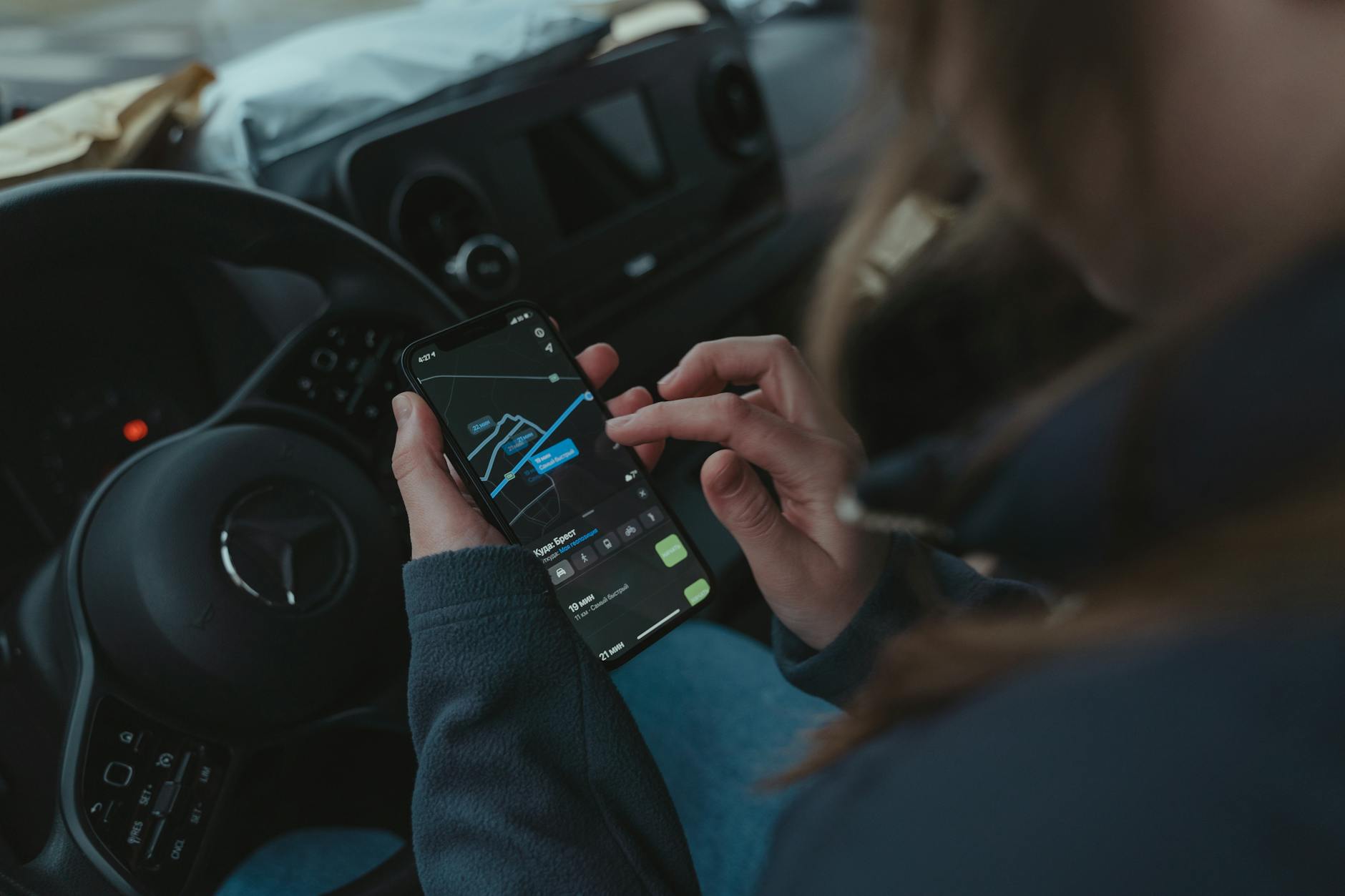
GPS navigation didn't just change how we get around. It quietly eliminated an entire category of human experience: being lost, and having to find your way back.
The Thomas Guide Was Basically Sacred
If you lived in Los Angeles, the San Francisco Bay Area, or a handful of other major metros from the 1960s through the early 2000s, the Thomas Guide was non-negotiable. It was a thick, spiral-bound street atlas broken into grid sections, cross-referenced so you could theoretically find any address if you were patient enough to work the index. "Theoretically" is doing some work in that sentence.
Using one required a specific set of skills. You'd look up a street name in the back, find its grid coordinates, flip to the right page, locate the intersection, mentally note your current position, and then — this was the part people always underestimated — figure out how to actually get there from where you were standing. This could take five minutes on a good day. It could take considerably longer if the pages were worn, if the street had been renamed, or if someone had spilled coffee on the relevant section.
And that was just Los Angeles. Cross into a neighboring county and you needed a different volume.
The Thomas Brothers company, which produced these guides, was founded in 1915. By the 1990s, the guides were selling hundreds of thousands of copies annually in California alone. Real estate agents kept them in their passenger seats. Delivery drivers treated them like professional tools. New residents bought them the way new residents today download apps.
What Getting Lost Actually Felt Like
Here's what people who came of age after GPS sometimes struggle to fully picture: getting lost in an unfamiliar city before the mid-2000s was a sustained, stressful experience with no guaranteed resolution.
You might be in a neighborhood you didn't recognize, at night, with no idea which direction returned you to familiar territory. You couldn't pull up a map on your phone — there was no map on your phone. You could stop and ask someone, which worked if there was someone around to ask, if they knew the area, and if you could follow verbal directions while also driving. ("Turn left at the Denny's" is only useful if you can find the Denny's.)
Or you could drive until something looked familiar. People did this constantly. It was a normal part of navigating.
Trip planning looked completely different too. Before a drive to an unfamiliar destination, you'd write out directions by hand from MapQuest — which launched in 1996 and was briefly a genuine revolution — or print them on paper, which you'd then attempt to read at red lights. Forgetting your printed directions at home was a minor catastrophe. Missing a turn meant potentially miles of confusion before you could course-correct.
How Fast GPS Changed Everything
The speed of the shift is remarkable in retrospect. Consumer GPS devices — Garmin, TomTom, and similar dedicated units — started reaching mainstream American buyers around 2003 and 2004. Within five years, the market had transformed completely. By 2008, Garmin alone was shipping tens of millions of devices annually.
Then the smartphone arrived and made even those dedicated devices feel redundant. Google Maps launched in 2005. The iPhone arrived in 2007. By 2010, a significant portion of American drivers had real-time, voice-guided navigation in their pockets. By 2015, it was essentially universal.
The Thomas Guide ceased publication of its printed street atlases in 2014. The company that had been producing indispensable navigation tools for nearly a century quietly stopped, because the need had evaporated.
Rand McNally, which had been printing road atlases since 1924, saw its sales collapse through the same period. AAA's TripTik service — once a genuine membership benefit that travelers planned trips around — became a legacy offering that most members didn't know still existed.
The Surprising Ways Navigation Shaped Cities
What's easy to overlook is how the difficulty of navigation once shaped urban design itself. Cities that grew up before GPS had to be legible — designed so that people could orient themselves using visual landmarks, logical street grids, and clear signage. Planners thought about how a stranger would find their way.
Boston's infamously tangled street layout was a navigation nightmare long before GPS, because it evolved organically from colonial-era cow paths rather than being planned. Phoenix and other grid-based Sun Belt cities were partly appealing to postwar migrants precisely because their street systems were comprehensible without a guide.
The need to ask for directions also created a social texture that's largely gone. You stopped at a gas station, a diner, or someone's front yard. Brief conversations happened. Local knowledge transferred. It was inefficient and occasionally unreliable, but it was also a form of human contact embedded in ordinary travel.
Something Small Disappeared
This isn't a lament for the era of being lost. Getting lost was frequently just unpleasant — stressful, time-wasting, and occasionally dangerous in ways that had nothing to do with adventure. The ability to navigate anywhere confidently is a genuine quality-of-life improvement that's easy to take for granted precisely because it works so seamlessly.
But there's a cognitive skill that quietly atrophied. Spatial reasoning — the ability to hold a mental map of an area, to understand direction and distance intuitively — develops through the experience of navigating. Research published in the journal Nature Communications found that people who rely heavily on GPS show reduced activity in the hippocampus, the brain region associated with spatial navigation, compared to those who navigate independently.
We traded a skill for a service. Whether that's a straightforward upgrade or something more complicated probably depends on how much you valued the skill to begin with.
The Thomas Guide is gone. Getting lost is nearly optional now. And somewhere in that shift is a small, strange thing worth noticing — the fact that an entire category of human experience, one that shaped how people traveled, planned, and connected with strangers, basically disappeared in about a decade.
We barely had time to say goodbye.